70% of online shopping carts get abandoned before checkout. That's a staggering number, and it points to something important about how people shop online.
Most of the time, it's not that your visitors don't want what you're selling. They don't feel enough urgency to buy it right now.
And "right now" is the only window that matters in ecommerce, because the moment someone clicks away, the odds of them coming back drop off a cliff.
That's exactly why a limited-time offer works so well. It's a promotion with a built-in deadline, designed to compress a buyer's decision timeline from "maybe later" to "I need this now." Whether it's a 24-hour flash sale, a free shipping window, or a VIP early-access drop, the mechanic is the same: give people a reason to act before the opportunity disappears.
Here are a few highlights of what I'll cover:
- The three psychological triggers that make limited-time offers almost irresistible
- 10 proven limited-time offer strategies with real brand examples you can adapt today
- A multi-channel promotion playbook (email, SMS, push notifications, onsite, social, ads) with a sample 3-day timeline
What You'll Learn
- Why Limited-Time Offers Work (The Psychology)
- Types of Limited-Time Offers
- 10 Creative Limited-Time Offer Ideas (With Examples)
- 1. Promote Your Limited-Time Sale with a Popup
- 2. Convert Abandoning Shoppers with a Timely Popup
- 3. Leverage the Holiday Season
- 4. Offer Free Delivery for a Limited Time
- 5. Create Urgency-Driven Popups
- 6. Add Psychological Triggers to Email Subject Lines
- 7. Drive Urgency with an Email Countdown Timer
- 8. Reword Your Limited-Time Deals
- 9. Recommend Products in Your Emails
- 10. Tease Upcoming Limited-Time Sales
- How to Promote Your Limited-Time Offer (Multi-Channel Playbook)
- Wrapping Up
Why Limited-Time Offers Work (The Psychology)
Limited-time offers aren't just a pricing tactic. They're a psychological trigger, and three well-documented principles explain why they convert so reliably.
The Scarcity Principle. Robert Cialdini's research in Influence showed that people assign more value to things that are less available. When something feels scarce (whether it's limited by time, quantity, or access), we instinctively want it more. In ecommerce, a countdown timer or "only 3 left" label flips that switch instantly.
Loss Aversion. Nobel laureate Daniel Kahneman demonstrated that losing something feels roughly twice as painful as gaining something of equal value. A limited-time offer reframes a purchase decision: it's no longer "do I want to spend $50?" It becomes "can I afford to lose this 30% discount?" That's a completely different mental calculation.
FOMO (Fear of Missing Out). One study found that 60% of consumers make reactive purchases because of FOMO, most within 24 hours. FOMO marketing works because it introduces social and temporal pressure at the same time. When your subscriber sees "ends tonight" in their inbox, they're not just worried about missing the deal. They're worried about being the person who missed it.
These three forces compound each other in urgency marketing for ecommerce. Your shoppers are already browsing with intent. A deadline just gives them permission to stop deliberating and start buying.
Types of Limited-Time Offers
Before I get into specific strategies, it helps to know the four main categories. Most limited-time offer examples fall into one of these buckets, and the best campaigns often combine two or more.
Time-Based Offers
These are the most common. Flash sales, 24-hour deals, weekend promotions, countdown-driven discounts. The deadline is a specific date or clock. Think "ends at midnight" or "today only." Simple, familiar, effective.
Quantity-Based Offers
Instead of a time limit, the constraint is inventory. "Only 100 available" or "first 50 buyers get free shipping." This works especially well for product drops and limited runs because the scarcity is tangible. Shoppers can picture the item selling out.
Access-Based Offers
These limit who can buy, not when. VIP early access, loyalty member exclusives, subscriber-only pricing. The scarcity here is belonging. Not everyone gets the deal, which makes the people who do feel special. It's one of the most effective ways to reward your best customers while still driving revenue.
Bonus-Based Offers
The product price doesn't change, but you add a time-sensitive sweetener. Free gift with purchase, double loyalty points for 48 hours, spend $75 and get a mystery item. These protect your margins while still creating urgency. They're particularly useful for brands that don't want to train customers to wait for discounts.
Now let's see all four types in action.
10 Creative Limited-Time Offer Ideas (With Examples)
Each of these strategies comes from a real ecommerce brand. I've included what they did, why it works, and how you can adapt it for your own store.
1. Promote Your Limited-Time Sale with a Popup
Whether you're throwing a weekend-long sale or a discount code valid for 24 hours, a well-timed popup can promote your limited-time offer to your site visitors in the right place at the right time.
BarkBox converts visitors into first-time customers by offering $40 worth of freebies. Then, they drive urgency by limiting the campaign to "this week only."
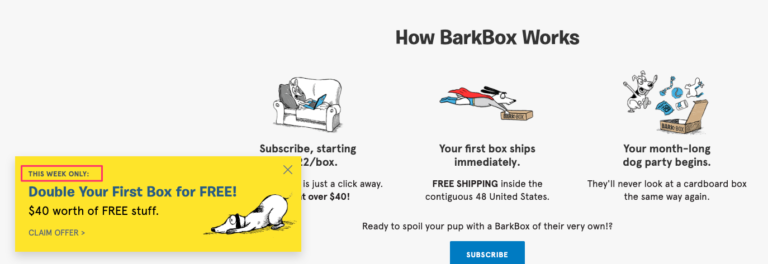
This type of limited-time offer works especially well for converting prospects at the consideration stage of their sales funnel.
2. Convert Abandoning Shoppers with a Timely Popup
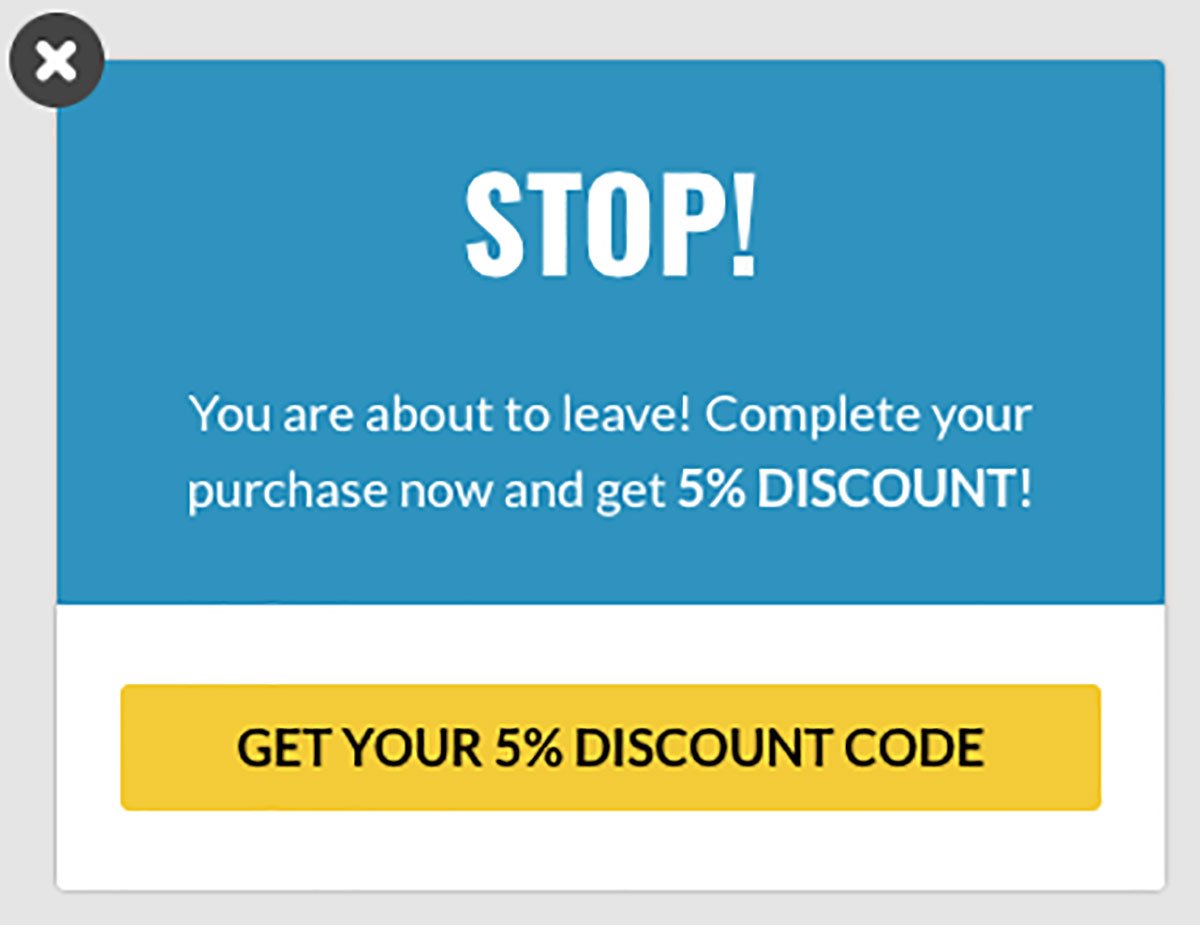
You don't necessarily have to run a big sale or discount your products to nudge your site visitors with urgency. By adding time limits to your exit-intent campaigns, you can stop abandoning shoppers and increase your conversions.
Nicehair did exactly this with their exit-intent popup:
When users clicked the button, they saw a success step with a time limit added to their discount code:
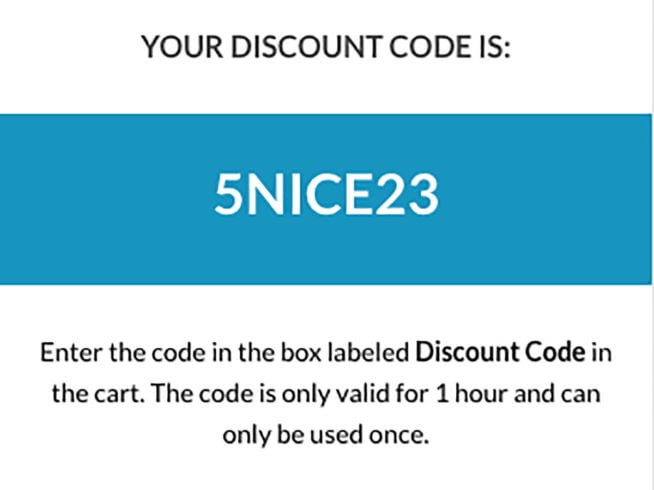
The result? They got a 44.76% conversion rate during the period they ran this campaign.
3. Leverage the Holiday Season
The holiday shopping season has the potential to drive ecommerce sales for several reasons: it's limited by a certain time, and it already drives a sense of urgency and scarcity.
Here's an example of a Black Friday popup that works for several reasons:
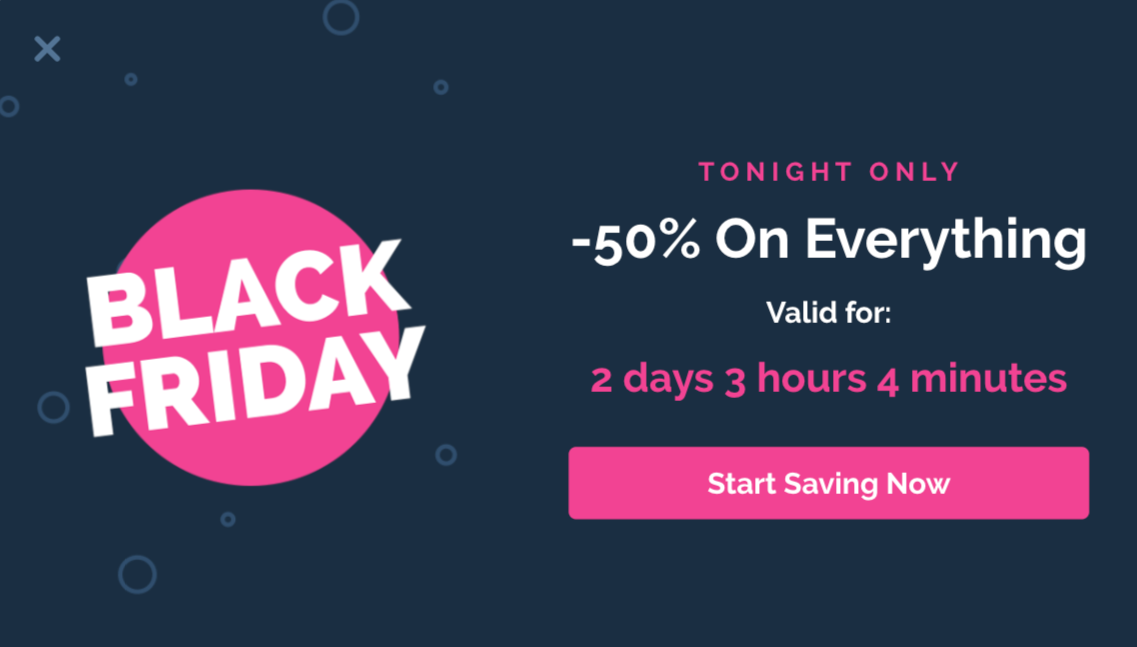
This popup works because it grabs attention with its color scheme and Black Friday logo, clearly states the benefit (50% on everything), has a value-driven call-to-action button, drives urgency with the headline "Tonight Only," and the countdown timer triggers urgency even further.
4. Offer Free Delivery for a Limited Time
There's a common misconception that an attractive limited-time offer must include a big discount. But that's not always necessary. In fact, 93% of consumers are likely to spend more if an online store offers free shipping.
Silvan shows how to do this effectively with a free delivery popup:
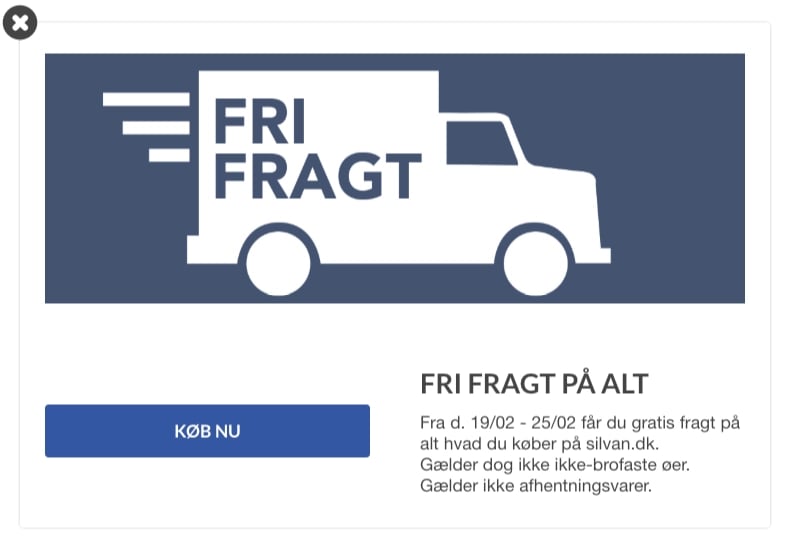
(Free Shipping on Everything: You get free shipping on everything you buy between 19/02 and 25/02.)
From the headline, you can easily understand that the company is offering free delivery. And when you read the copy, you learn that it's limited by time.
5. Create Urgency-Driven Popups
With minor improvements, popups can be powerful tools that increase sales drastically. And limited-time offer campaigns are a great example.
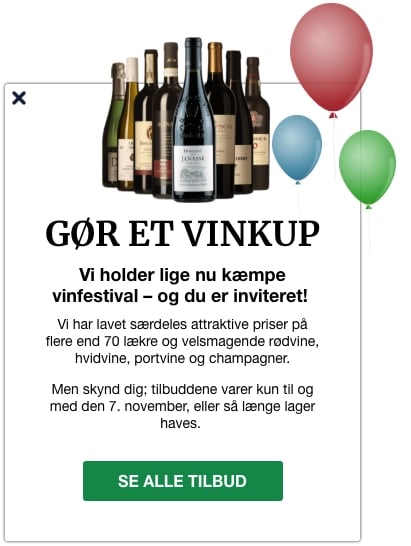
Jysk Vin frames their limited-time offer as a big party and visually supports it with balloons:
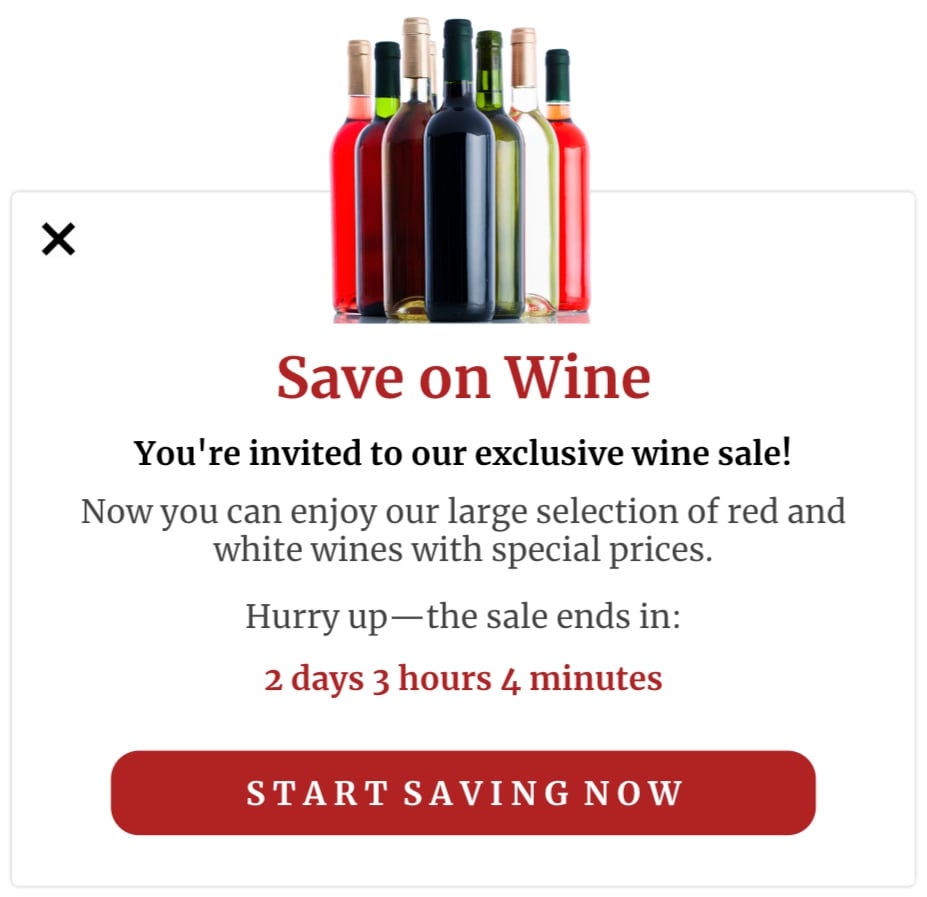
You can further improve such a campaign by adding a countdown timer and a benefit-driven CTA:
6. Add Psychological Triggers to Email Subject Lines
For your urgency-driven email campaign to convert, first you need to get your emails opened. And a well-crafted email subject line is the first condition for that.
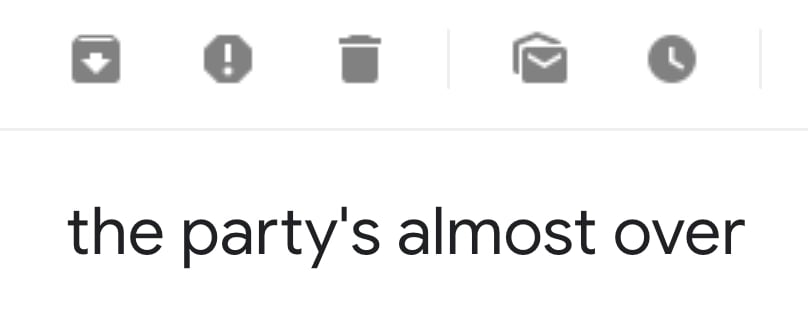
Brooklinen implies that there's a party going on without you, and you're about to miss out on it if you don't act quickly:
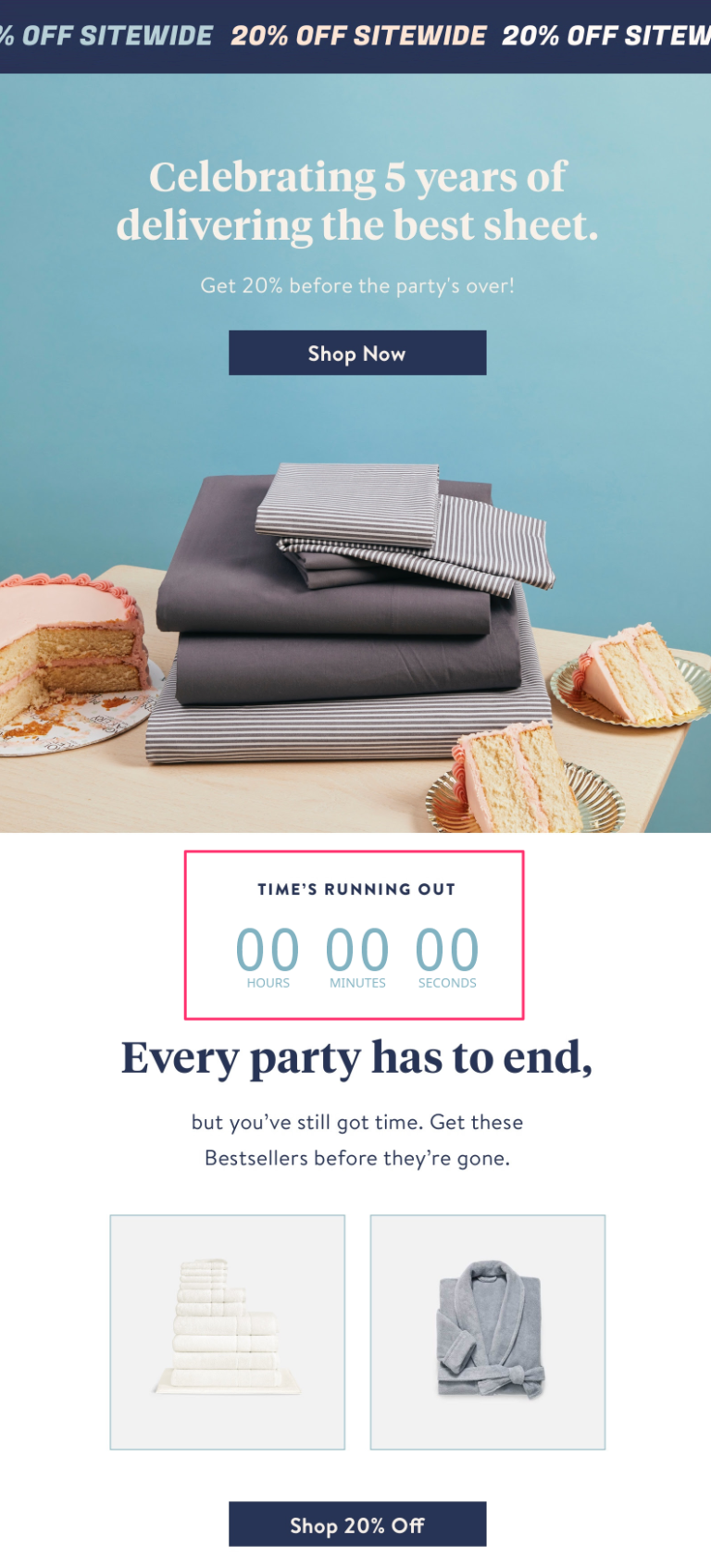
The email content reveals they're celebrating their fifth anniversary with a 20% discount on everything for a limited time only:
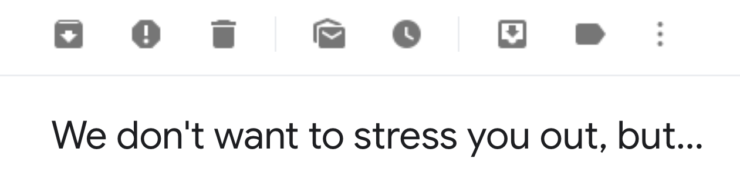
Firebox takes another approach to stand out while promoting their time-bound offer:
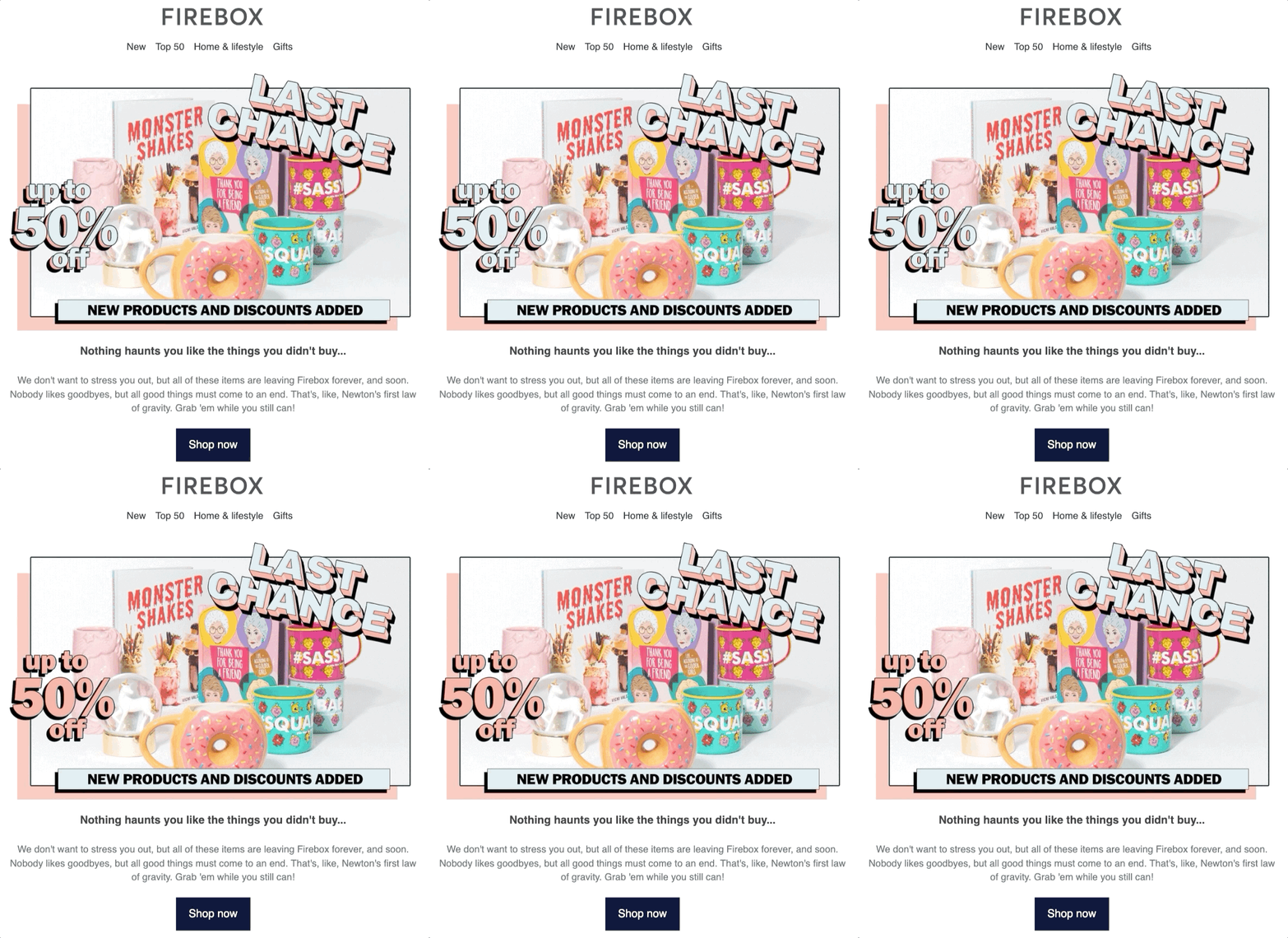
Taking an upside-down approach to psychological triggers, they drive urgency by, ironically, claiming that's not their intention:
7. Drive Urgency with an Email Countdown Timer
By adding a countdown timer to your emails, you can encourage your subscribers to take action in a short time.
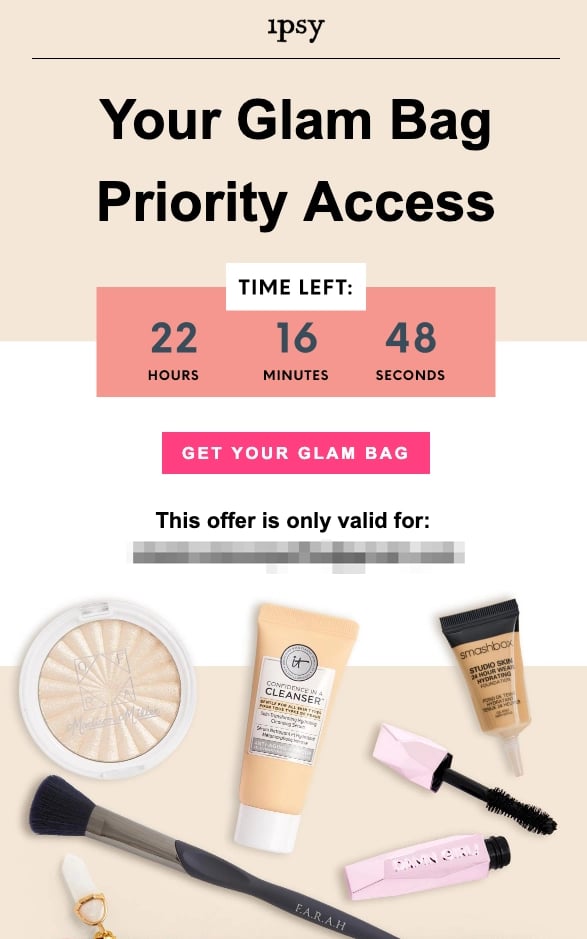
Ipsy uses this approach to persuade abandoning shoppers with a unique limited-time offer. When someone leaves the site without completing their subscription order, they receive an email with "priority access":
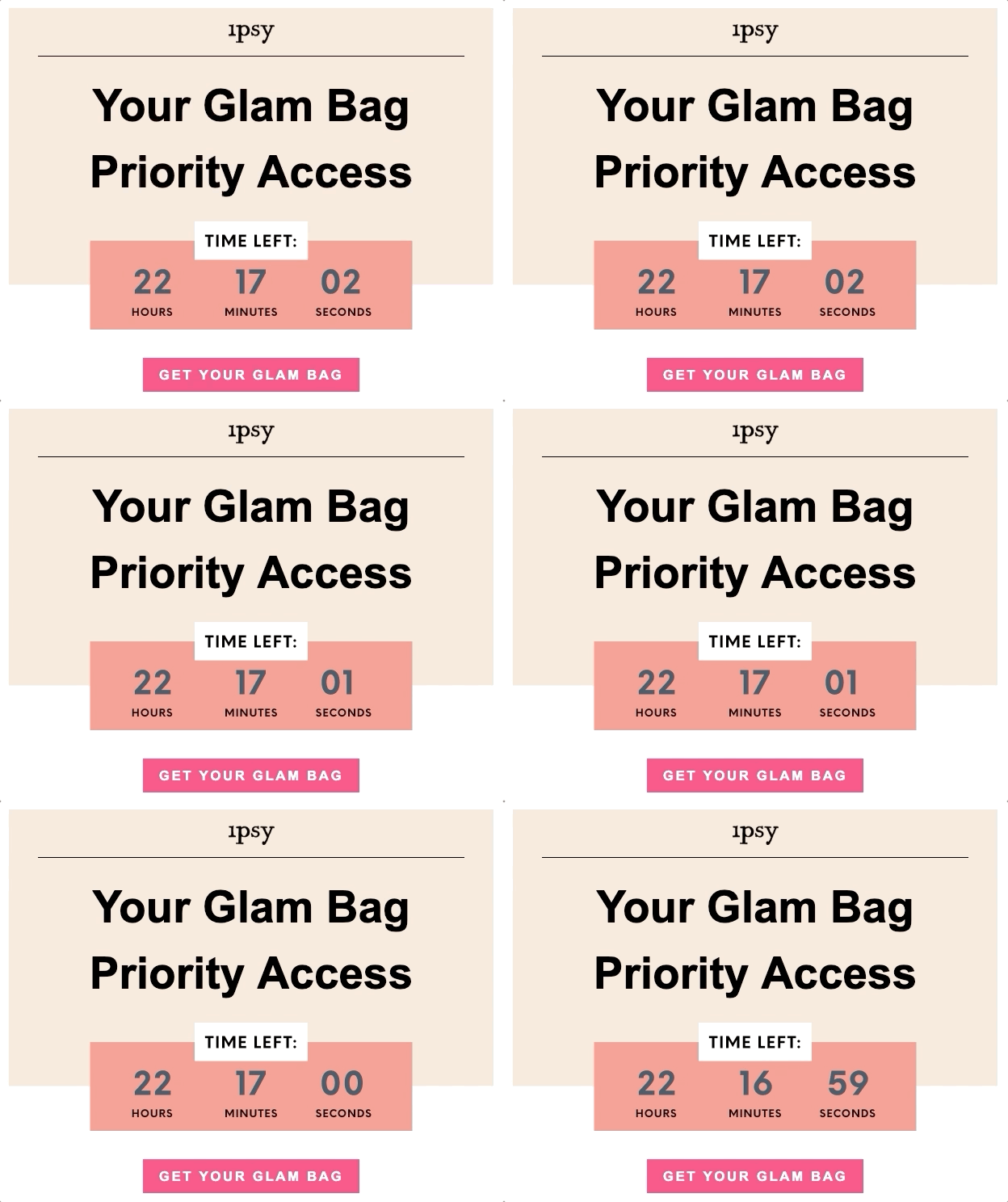
To support this exclusive offer, they use a countdown timer to drive urgency:
8. Reword Your Limited-Time Deals
When everybody is offering the same thing, it becomes impossible to get your subscribers' attention because they get immune to "today-only" sales.
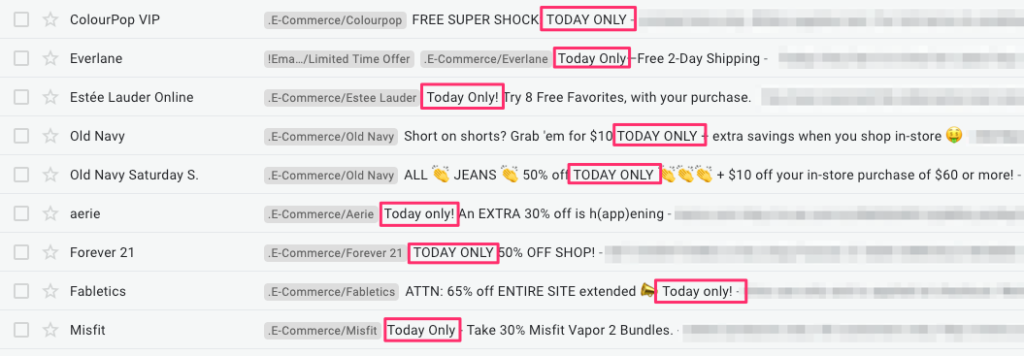
With a minor tweak to your wording, you can reframe your limited-time offer and break the mold.
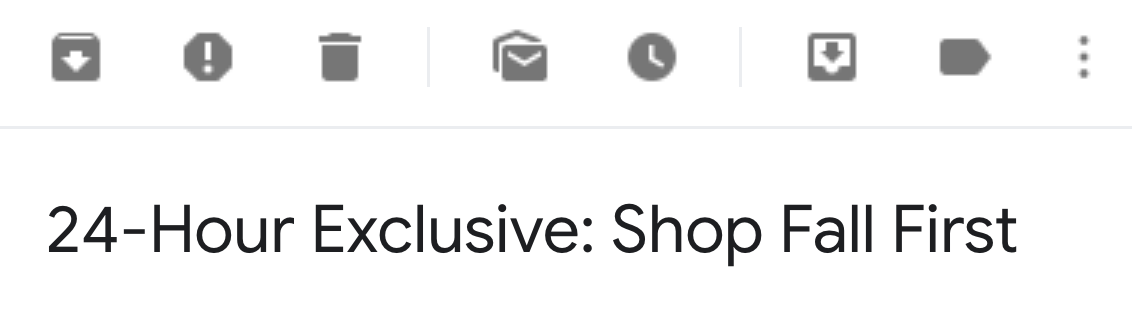
Anthropologie uses numbers and focuses on the hours to enhance the feeling of urgency:
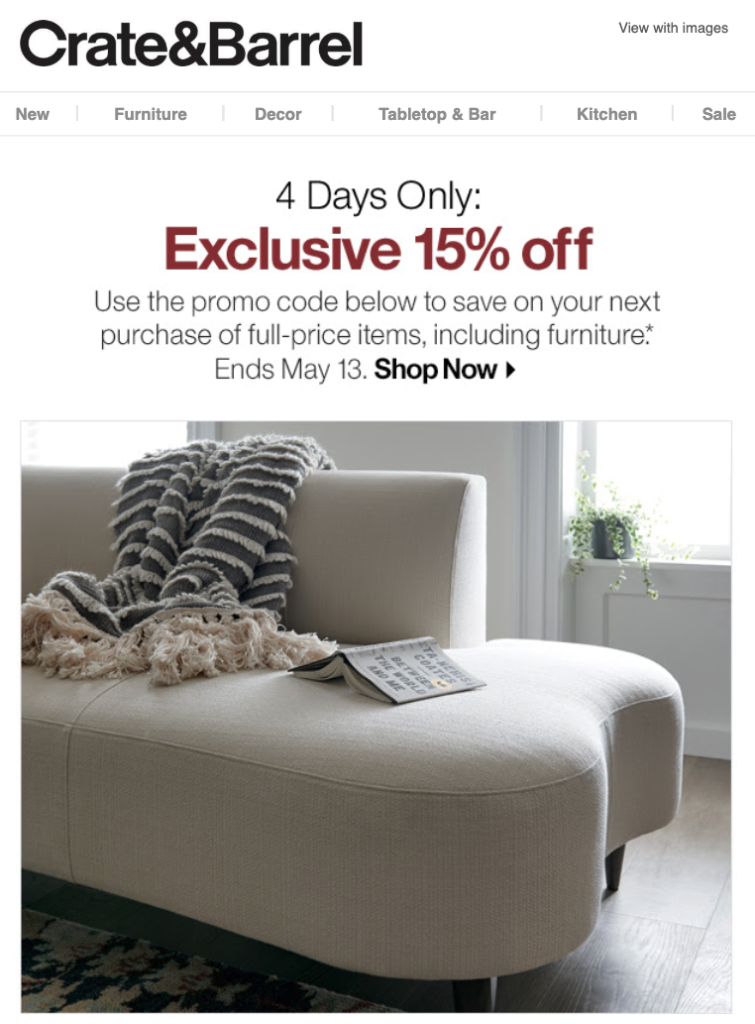
Here's another way to frame your time-bound promotional offers from Crate and Barrel:
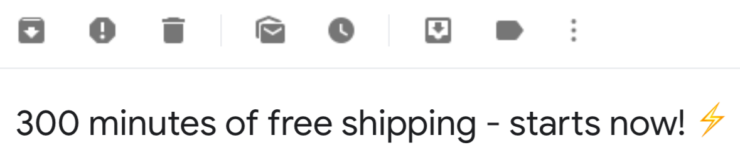
If you want to get more creative, try Vinomofo's approach with super-specific numbers. Running a free shipping offer that only lasts for 300 minutes:
9. Recommend Products in Your Emails
A limited-time discount is an effective incentive, as long as your prospects know what to buy. Your limited-time offer emails are the perfect places to guide your subscribers for better buying decisions.
Colourpop sent a personalized, curiosity-evoking subject line:
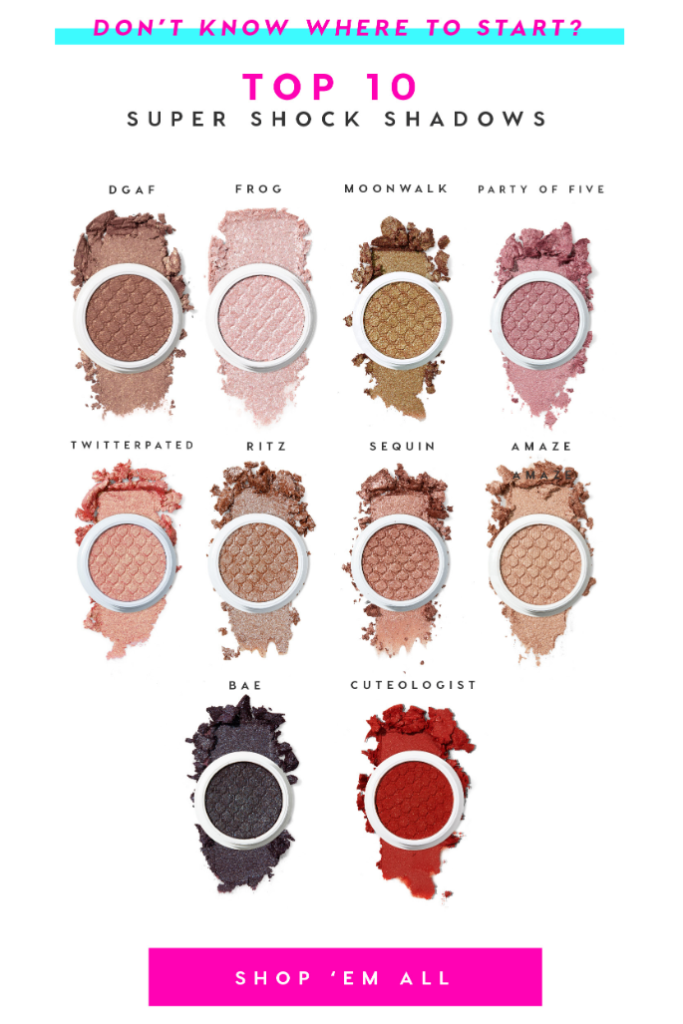
As you scroll down, they help you out if you don't know where to start:
10. Tease Upcoming Limited-Time Sales
What do you do when your offer ends? A better solution is to tease your upcoming offers or product launches.
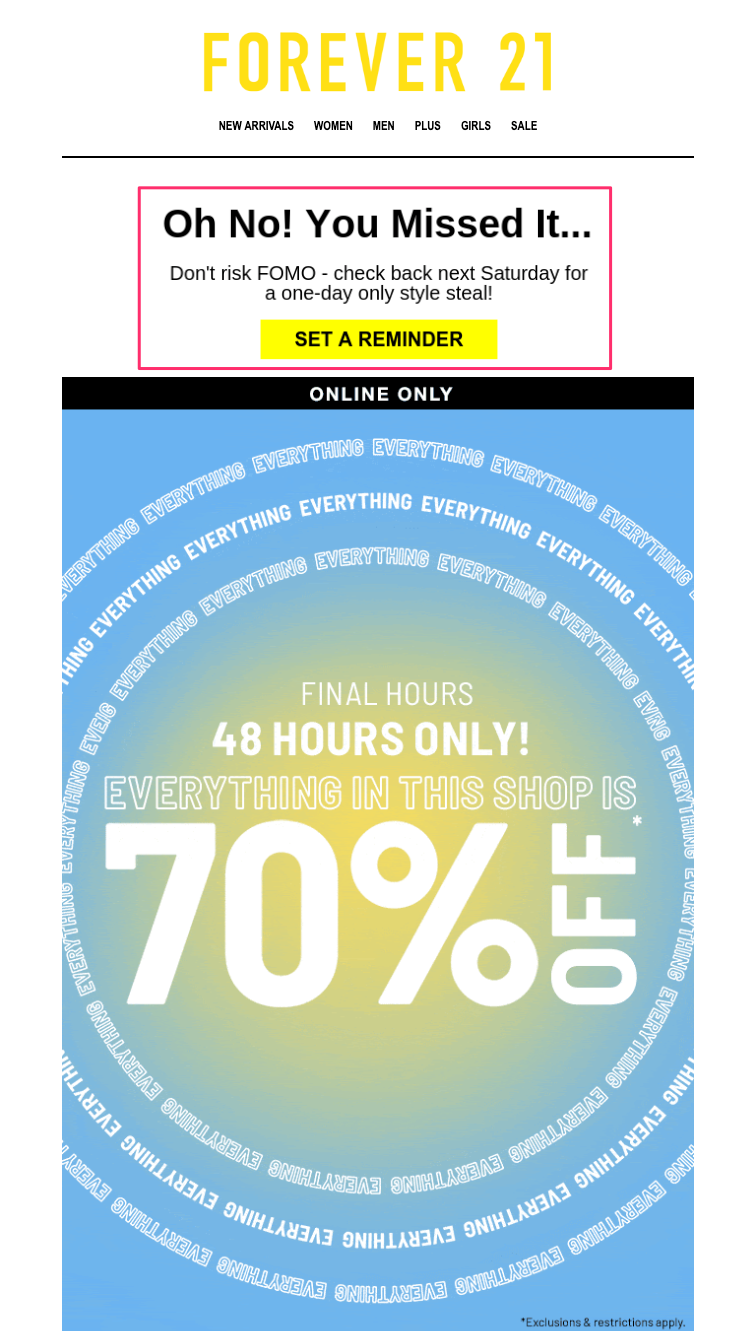
Forever 21 has a creative solution. When you open one of their promotional emails too late, they inform you that you missed the offer and suggest you check back next Saturday:
To make things easier, they send a calendar invite in the email:
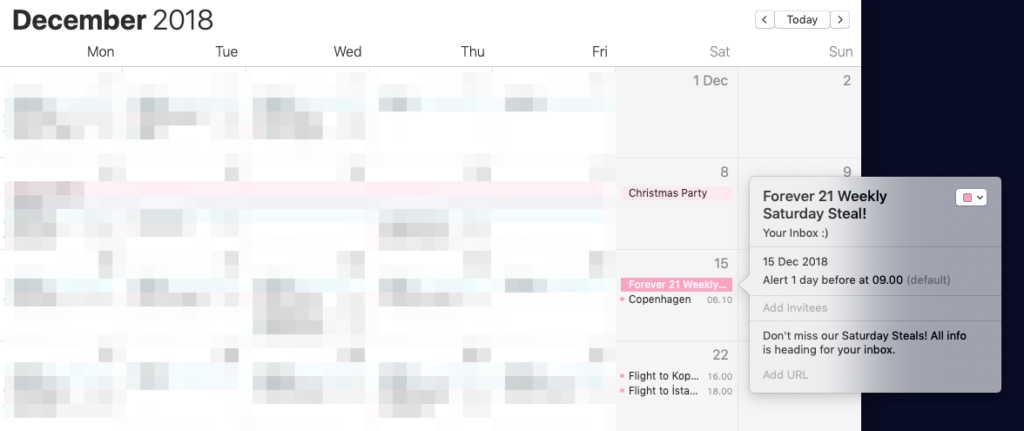
This way, Forever 21 not only stays top-of-mind but also sneaks into your everyday life.
How to Promote Your Limited-Time Offer (Multi-Channel Playbook)
A great limited-time offer with mediocre promotion is just a discount no one sees. The brands that drive real revenue from limited time offers treat every offer as a multi-channel campaign. Here's the playbook.
Email: The Backbone
Your email sequence should follow three beats: announcement, reminder, last chance. The first email announces the sale, a mid-day email reminds openers who haven't clicked, and a final email goes out in the last hour with "almost over" messaging.
SMS: The Urgency Escalator
Send a short, direct SMS on the last day (or last few hours) of your offer. SMS open rates hover around 98%, making it the perfect channel for final-hour pushes. Keep the message under 160 characters: the deal, the deadline, and a link.
Push Notifications: The Real-Time Reminder
Push notifications have an average click-through rate of 7.8% across industries, significantly higher than email's typical 2-3%. Send a push notification when the offer launches and another in the final hours.
Onsite: Popups, Sticky Bars, and Countdowns
Every visitor to your site during a limited-time offer should know about it within seconds. Use a sticky bar at the top of the page for passive awareness and a timed or exit-intent popup for direct conversion.
Social Media: Build Anticipation
Tease the offer 1-2 days before it goes live with a "something's coming" post. Go live or post stories when the sale launches. Then use countdown stickers in stories on the final day.
Paid Ads: Retarget Warm Audiences
Limited-time offer ads perform best when shown to people who already know your brand. Retarget recent site visitors, email subscribers, and past customers with the offer.
Sample 3-Day Campaign Timeline
- Day 1 (Launch): Announcement email at 9am. Push notification at 10am. Social media post. Onsite sticky bar and popup go live. Retargeting ads activate.
- Day 2 (Remind): Reminder email to non-openers at 11am. Social media story with countdown. Blog or landing page goes live for organic traffic.
- Day 3 (Close): "Last chance" email at 8am. Push notification at 2pm. SMS to engaged subscribers at 3pm. Social story with "hours left" countdown. Popup switches to "ending tonight" messaging. Final email at 7pm to clickers who haven't purchased.
Wrapping Up
Limited-time offers work because they tap into fundamental human psychology: scarcity, loss aversion, and the fear of missing out. But the execution matters just as much as the psychology.
The brands that get the best results treat every limited time offer as a coordinated campaign across email, SMS, onsite, and social. They build anticipation before the offer drops, they remind people throughout, and they always close with a final push in the last hours.
Pick one or two strategies from this guide and test them on your next campaign. Start simple, measure what works, and build from there. The goal isn't to run more promotions. It's to make every promotion count.