
Your Mailchimp bill keeps climbing, your automations feel stuck in 2015, and you're paying for contacts who unsubscribed months ago. If that sounds familiar, you're not alone.
Thousands of ecommerce brands outgrow Mailchimp every year. The good news? The best Mailchimp alternatives do more, cost less, and were actually built for online stores.
The short answer? If you run an ecommerce brand and want a platform that turns shopper data into automated revenue, Drip is the strongest Mailchimp alternative on this list. For pure newsletters or the tightest budgets, a few free options below will serve you well.
What You'll Find in This Post
- Why Are People Leaving Mailchimp?
- What Are the Best Mailchimp Alternatives?
- 1. Drip: Best Mailchimp Alternative for Ecommerce
- 2. Klaviyo: Best for Enterprise Ecommerce Budgets
- 3. Omnisend: Best Free Plan for Small Stores
- 4. ActiveCampaign: Best for B2B Automation
- 5. Brevo: Best for Volume-Based Pricing
- 6. MailerLite: Best Cheap Mailchimp Alternative
- 7. Kit: Best for Creators and Newsletters
- 8. Constant Contact: Best for Beginners
- 9. GetResponse: Best for Webinars and Funnels
- 10. HubSpot: Best for Sales and Marketing in One
- 11. AWeber: Best Simple Free Plan
- 12. Moosend: Best for High-Frequency Senders
- What Are the Best Free Mailchimp Alternatives?
- How Did I Evaluate These Mailchimp Alternatives?
- The Bottom Line
Why Are People Leaving Mailchimp?
Mailchimp started as a simple newsletter tool, and in a lot of ways it still is. That's the problem.
The biggest complaint? Pricing. Mailchimp bills you for every contact in your list, including people who already unsubscribed. So your cost creeps up even when your engaged audience doesn't.
The free plan caps you at 250 contacts and 500 sends a month, with Mailchimp branding on every email. And once you cross into paid plans, the price scales fast as your list grows.
Then there's the ecommerce gap. Mailchimp can send a campaign, but it wasn't built to triage shopper behavior, attribute revenue per person, or trigger flows off cart and catalog data the way a store needs. So when brands start chasing real revenue, they start shopping for alternatives to Mailchimp.
Here's the deal: the right replacement depends on whether you sell products, publish newsletters, or just want a cheaper inbox. Let's break down all twelve.
What Are the Best Mailchimp Alternatives?
Here's my ranking of the top Mailchimp alternatives for ecommerce and growing brands in 2026:
- Drip: Best for revenue-focused ecommerce automation
- Klaviyo: Best for enterprise ecommerce budgets
- Omnisend: Best free plan for small stores
- ActiveCampaign: Best for B2B and complex automation
- Brevo: Best for volume-based (not contact-based) pricing
- MailerLite: Best cheap, clean Mailchimp alternative
- Kit: Best for creators and newsletters
- Constant Contact: Best for total beginners
- GetResponse: Best for webinars and funnels
- HubSpot: Best for sales and marketing in one
- AWeber: Best simple free plan
- Moosend: Best for high-frequency senders
Here's how all twelve compare at a glance:
| Tool | Best for | Free plan? | Paid plans from |
|---|---|---|---|
| Drip | Revenue-focused ecommerce automation | No (14-day trial) | $39/mo (up to 2,500 active people) |
| Klaviyo | Enterprise ecommerce budgets | Yes (up to 250 profiles) | $20/mo |
| Omnisend | Small stores wanting a free plan | Yes (up to 250 contacts) | $16/mo |
| ActiveCampaign | B2B and complex automation | No (14-day trial) | $15/mo |
| Brevo | Volume-based pricing | Yes (300 emails/day) | $9/mo |
| MailerLite | A cheap, clean alternative | Yes (up to 500 subscribers) | $9/mo |
| Kit | Creators and newsletters | Yes (up to 10,000 subscribers) | ~$33/mo |
| Constant Contact | Total beginners | No (trial only) | $12/mo |
| GetResponse | Webinars and funnels | Yes (up to 500 contacts) | $19/mo |
| HubSpot | Sales and marketing in one | Yes (limited tools) | $20/seat/mo |
| AWeber | A simple free plan | Yes (up to 500 subscribers) | $12.50/mo |
| Moosend | High-frequency senders | No (30-day trial) | $9/mo |
Let me walk you through each option so you can decide which one fits your business.
1. Drip: The Best Mailchimp Alternative for Ecommerce
Drip is an ecommerce marketing automation platform built for one job: turning customer data into revenue. It's not a generalist newsletter tool that bolted on a store integration. It was designed for online retailers from day one.
 The core difference comes down to revenue. Drip tracks Revenue Per Person, not just opens and clicks, so you can see exactly which emails drive sales. For ecommerce teams trying to prove ROI, that's the metric that actually matters.
Drip's Visual Workflow Builder lets you map branching customer journeys with delays, decisions, goals, and split tests. Its pre-built Playbooks cover abandoned cart, browse abandonment, welcome series, and win-back flows, all powered by real-time data from Shopify, WooCommerce, or BigCommerce. So when a shopper abandons a cart, the right email fires with the exact items they left behind.
And the results can be real. Nifty Gifts saw a 77% revenue increase in its first two months on Drip, with a 46% open rate on its abandoned cart workflow. Pricing is transparent too: every plan gets every feature, starting at $39 a month for up to 2,500 people, with no gates on automations or segmentation. Drip bills by active people, not your total list, so inactive contacts don't count against you.
Where Drip Falls Short
Drip isn't the cheapest option here. At $39 a month it sits above the freemium crowd, so it's built for brands that are serious about selling, not hobby lists.
Who Should Choose Drip
Choose Drip if you sell products online and you're tired of guessing what your email is actually earning. It's the strongest fit for Shopify, WooCommerce, and BigCommerce brands that want enterprise-level personalization without an enterprise-level learning curve. If you've outgrown Mailchimp's newsletter roots, this is your upgrade.
2. Klaviyo: Best for Enterprise Ecommerce Budgets
Klaviyo is the other big name in ecommerce email, and it's a genuinely powerful platform. Its segmentation, predictive analytics, and deep Shopify data make it a favorite for data-heavy stores.
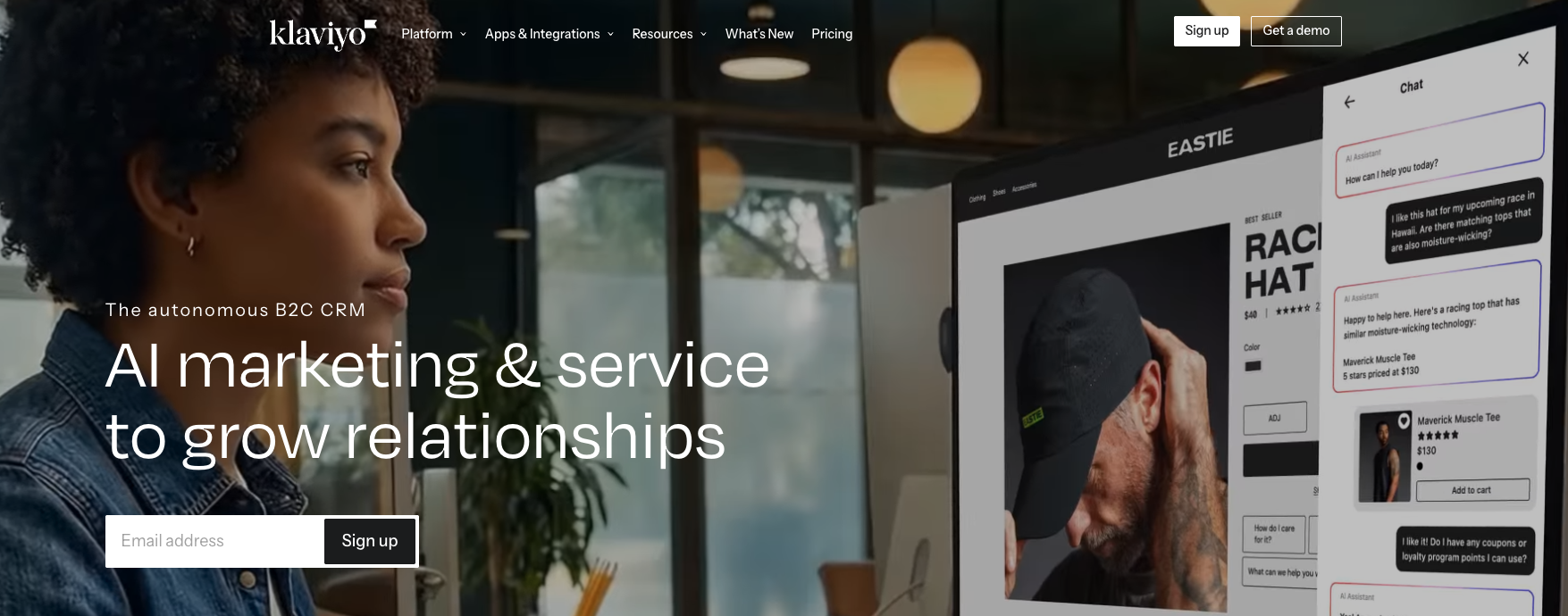 But that power comes with two catches. First, Klaviyo charges based on stored profiles, so your bill climbs as your list grows whether those contacts engage or not. At 10,000 contacts you're looking at around $130 a month, and it scales steeply from there. Second, many teams find it complex to master without a dedicated specialist.
This is exactly where brands tell us Drip feels easier to run day to day. Four of ten featured Drip customers actually switched from Klaviyo, citing ease of use as the deciding factor.
Who Should Choose Klaviyo
Klaviyo makes sense for larger ecommerce brands with the budget and the in-house expertise to push its advanced features. If you have a marketing analyst on staff and deep pockets, it's a serious contender.
3. Omnisend: Best Free Plan for Small Stores
Omnisend is built specifically for ecommerce, and its free plan is genuinely useful. You get automations, segmentation, and A/B testing at $0, capped at 250 contacts and 500 emails a month.
 For a small store testing the waters, that's a strong starting point, and Omnisend bundles email, SMS, and web push together nicely. Where it falls short is depth. As your flows get more sophisticated and your list grows, the automation logic and reporting don't go as deep as a revenue-first platform like Drip, and paid plans climb as your contacts do.
Who Should Choose Omnisend
Pick Omnisend if you're an early-stage store that wants ecommerce features on a free plan and plans to keep things relatively simple. It's a friendly first step away from Mailchimp.
4. ActiveCampaign: Best for B2B and Complex Automation
ActiveCampaign is an automation powerhouse with one of the most flexible workflow builders on the market. It also includes a light CRM, which makes it popular with service businesses and B2B teams.
 It starts at $15 a month with a 14-day trial and no free plan. But here's the trade-off: ActiveCampaign serves a broad, often B2B audience, so its ecommerce integration isn't as purpose-built as Drip's. You won't find the same dynamic product blocks, catalog sync, and store-native triggers that product sellers rely on.
Who Should Choose ActiveCampaign
Go with ActiveCampaign if your business runs on lead nurturing and sales pipelines more than product catalogs. For agencies, consultants, and B2B brands, it's a flexible, capable choice.
5. Brevo: Best for Volume-Based Pricing
Brevo (formerly Sendinblue) flips the usual pricing model on its head. Instead of charging by contact count, it charges by email volume, so you can store up to 100,000 contacts on the free plan and pay based on how many emails you actually send.
 That's great news if you have a big list but email it infrequently. The free plan allows 300 emails a day with Brevo branding. The limitation is that Brevo is a broad marketing tool, not an ecommerce specialist, so its store integrations and revenue reporting stay relatively basic compared to Drip.
Who Should Choose Brevo
Brevo fits businesses with large contact lists and lower send frequency, or anyone who hates paying for contacts they aren't emailing. It's also a solid pick if you want email and SMS in one affordable package.
6. MailerLite: Best Cheap Mailchimp Alternative
If your main gripe with Mailchimp is the price, MailerLite is the obvious place to look. It's clean, easy to use, and offers a free plan with up to 12,000 emails a month for up to 500 subscribers.
 Paid plans start at just $9 a month, which makes it one of the best-value tools on this list. Worth noting: MailerLite cut its free plan from 1,000 to 500 subscribers in late 2025, so factor that in. And while it covers the basics beautifully, it doesn't offer the deep ecommerce automation or revenue attribution that a store-focused platform like Drip provides.
Who Should Choose MailerLite
Choose MailerLite if you want a simple, affordable, good-looking email tool for newsletters and light automation. For budget-conscious small businesses, it's hard to beat.
7. Kit: Best for Creators and Newsletters
Kit (formerly ConvertKit) is built for creators: bloggers, course sellers, podcasters, and newsletter writers. Its free Newsletter plan is generous, covering up to 10,000 subscribers with unlimited emails, though it limits you to a single automation.
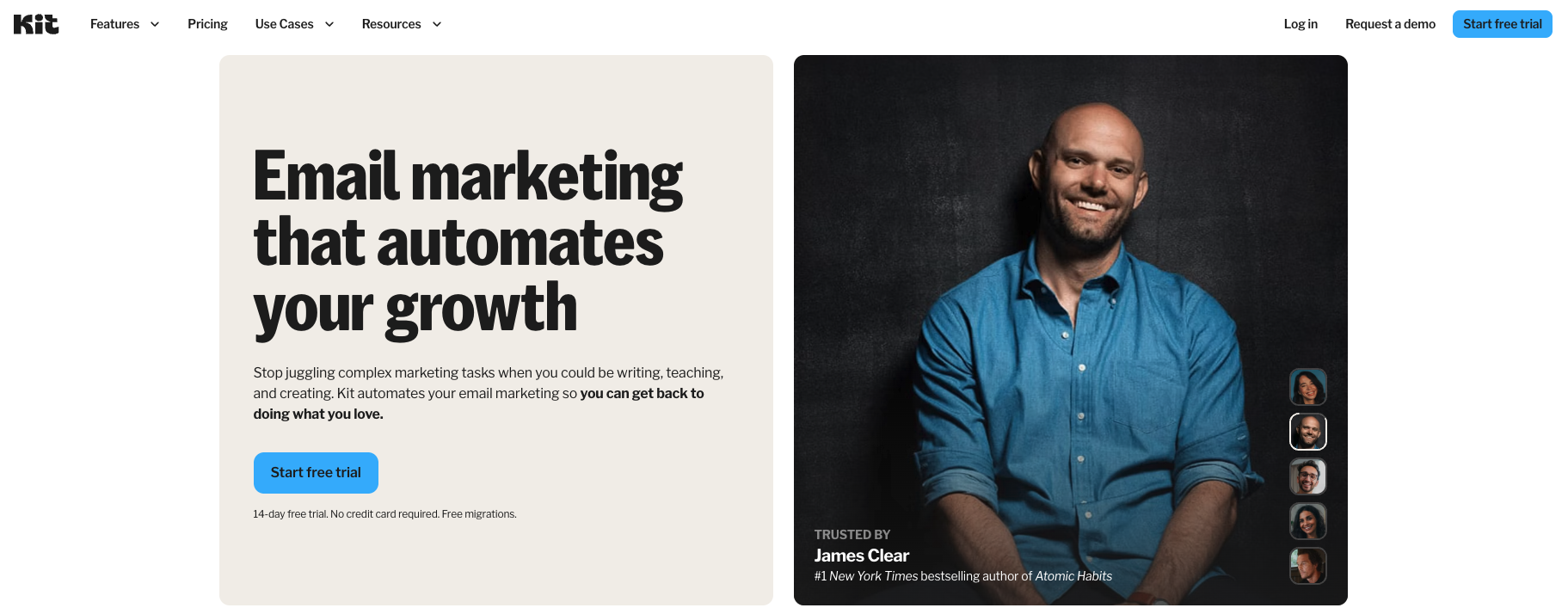 Paid plans that unlock full automation start around $33 a month for 1,000 subscribers. Kit shines at tagging, simple sequences, and monetizing an audience. But it's a creator tool, not an ecommerce engine, so it lacks the product blocks, cart triggers, and catalog sync that online stores need.
Who Should Choose Kit
Kit is ideal if you sell content, courses, or your own personal brand rather than physical products. For creators graduating from Mailchimp, it feels purpose-made.
8. Constant Contact: Best for Total Beginners
Constant Contact has been around forever, and it earns its reputation for being approachable. The interface is friendly, support is responsive, and event and survey tools round out the package.
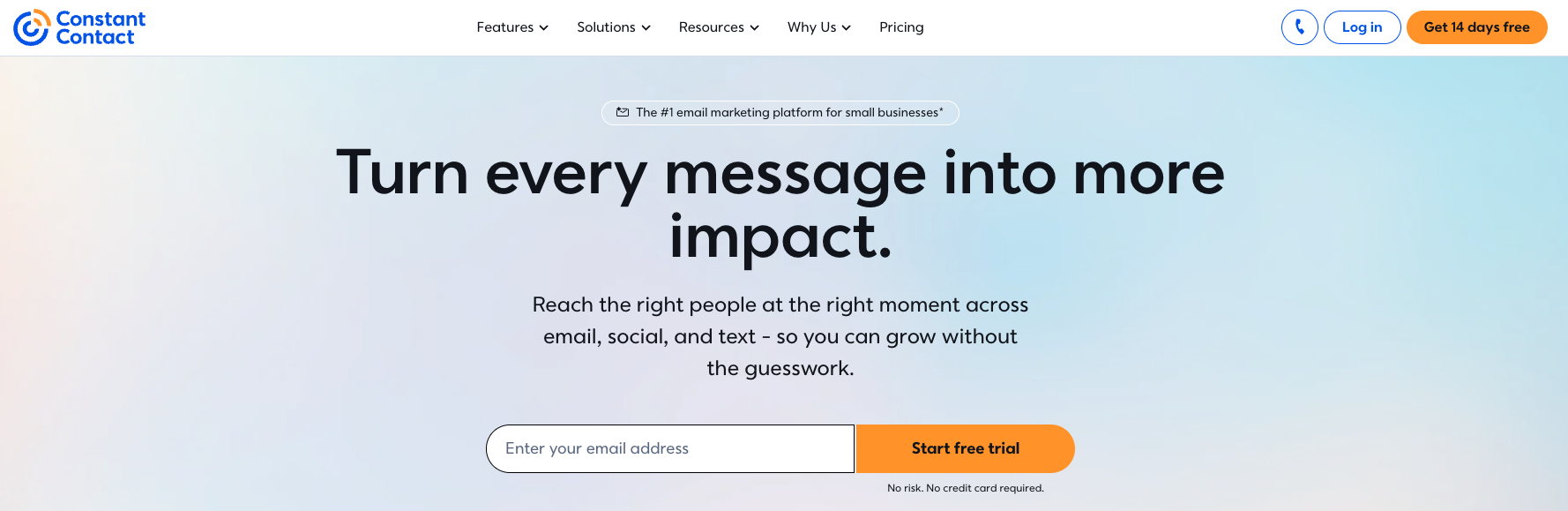 Plans start at $12 a month with no free plan, just a trial. The catch is that its automation is fairly basic and its ecommerce features are limited. So while it's easy to start, you may bump into a ceiling fast if you want behavior-based, revenue-driven flows like Drip's.
Who Should Choose Constant Contact
Constant Contact suits nonprofits, local businesses, and first-timers who value hand-holding over horsepower. If you want simple and supported, it delivers.
9. GetResponse: Best for Webinars and Funnels
GetResponse is a marketing suite that goes beyond email. Its standout feature is built-in webinars, plus landing pages and conversion funnels, all under one roof.
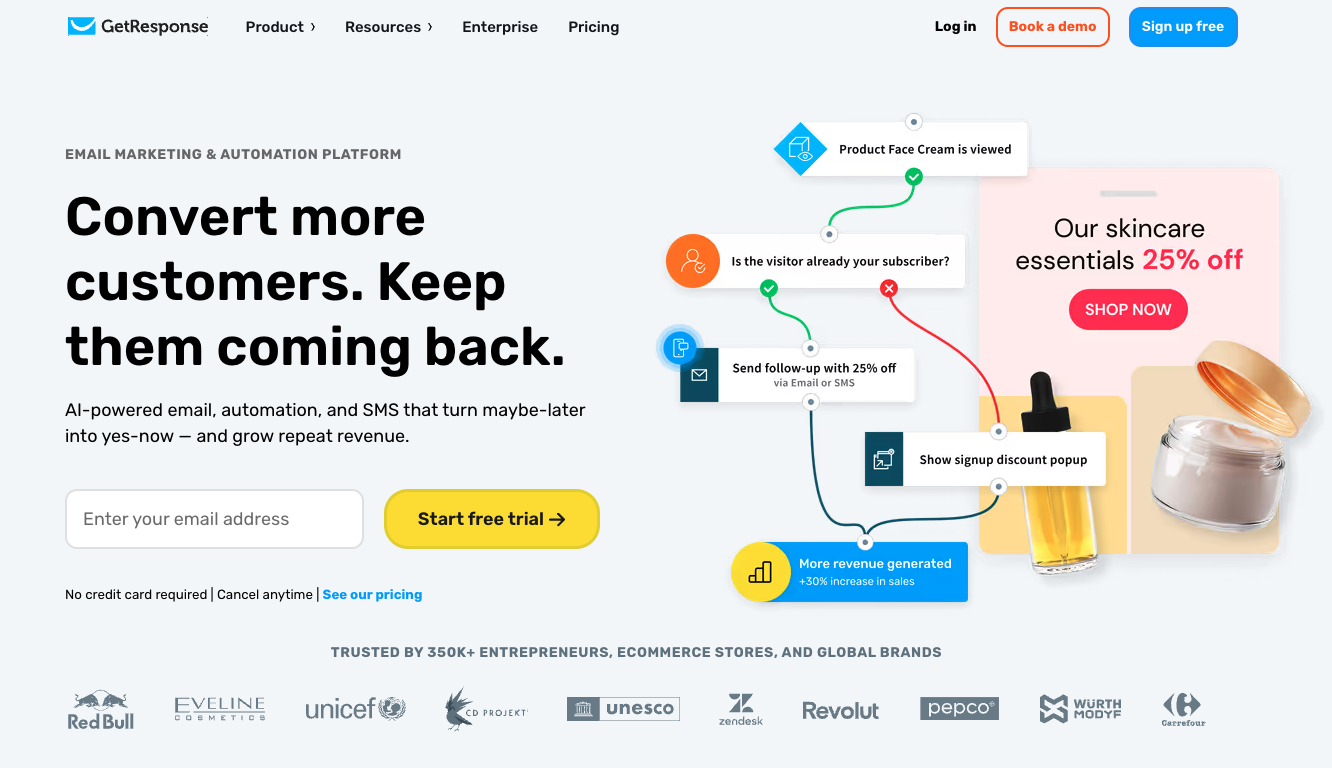 It offers a free plan for up to 500 contacts, with paid plans from $19 a month and marketing automation from $59. That all-in-one breadth is the appeal. But it's also the trade-off: GetResponse spreads itself across many tools, so its ecommerce automation isn't as focused or store-native as Drip's purpose-built flows.
Who Should Choose GetResponse
GetResponse is a smart pick if webinars and funnels are central to how you sell. Coaches, educators, and info-product businesses get the most from it.
10. HubSpot: Best for Sales and Marketing in One
HubSpot is the heavyweight here, a full marketing, sales, and service platform built around a powerful CRM. Its free tier includes email, forms, and basic automation, which is appealing for growing teams.
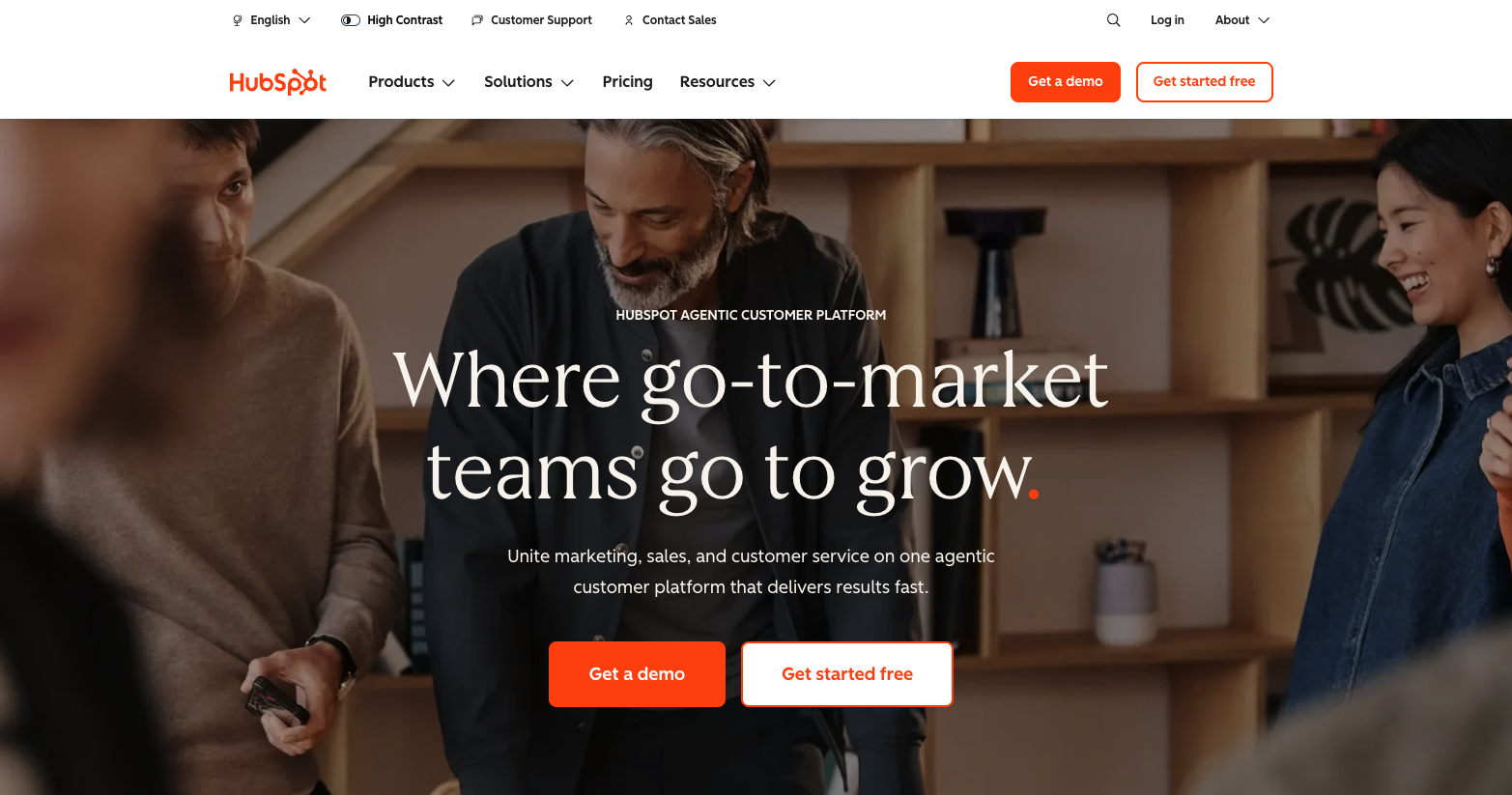 But the jump from free to serious is steep. The Marketing Hub Starter runs $20 per seat a month, while Professional lands at $890 a month on annual billing, plus a mandatory $3,000 onboarding fee. For most independent ecommerce brands, that's overkill. You'd pay for a sprawling CRM when what you really want is revenue-driving email, which is exactly Drip's lane.
Who Should Choose HubSpot
HubSpot makes sense for larger B2B organizations that need sales and marketing tightly integrated and have the budget to match. For a focused ecommerce store, it's usually more than you need.
11. AWeber: Best Simple Free Plan
AWeber is a veteran email tool that keeps things refreshingly simple. Its free plan covers up to 500 subscribers and 3,000 emails a month, with no time limit.
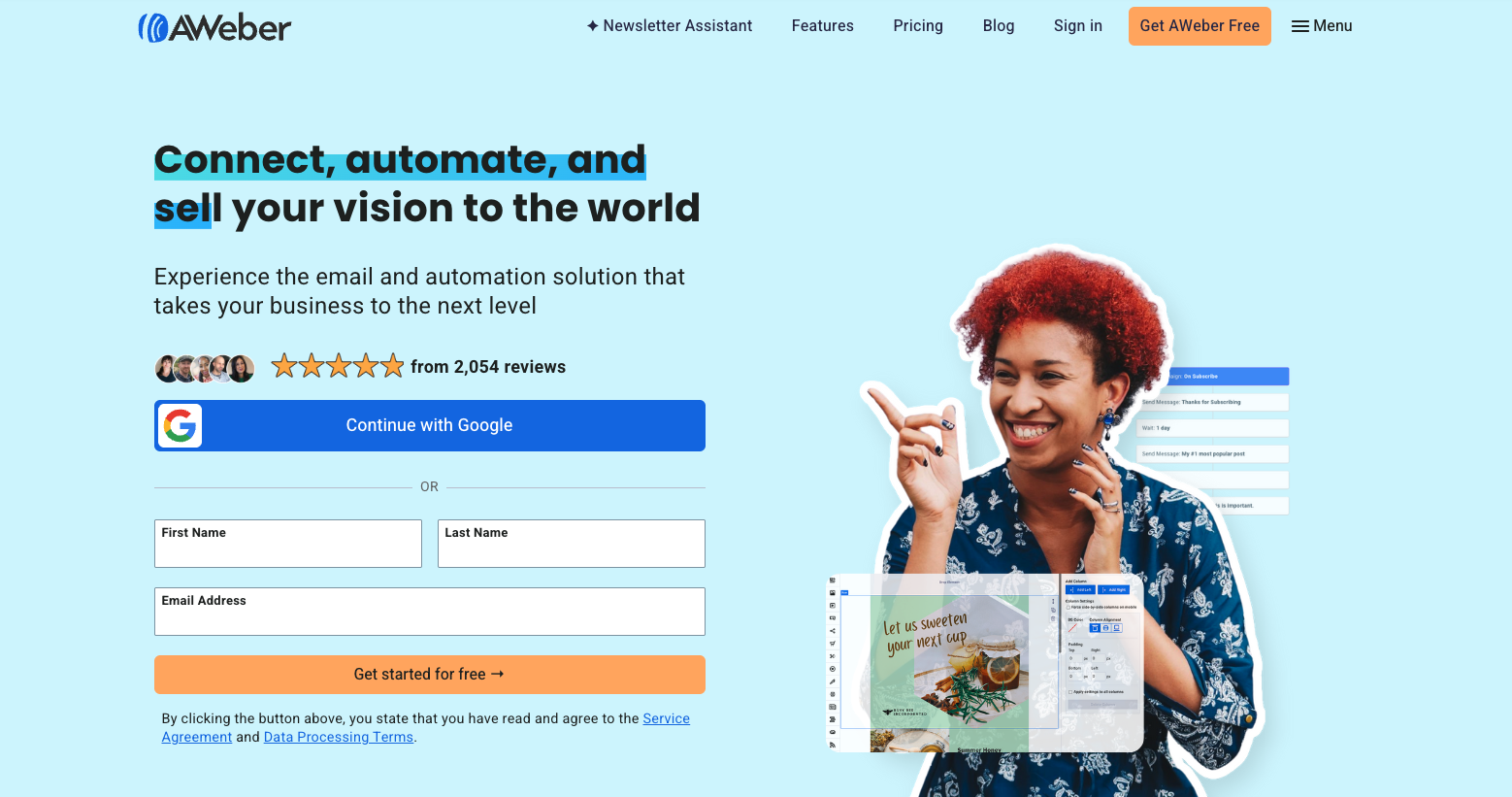 Paid plans start at $12.50 a month, and you get solid deliverability, a big template library, and reliable support. Where it lags is modern automation and ecommerce depth. AWeber handles broadcasts and basic sequences well, but it won't trigger sophisticated, revenue-attributed flows off shopper behavior the way Drip does.
Who Should Choose AWeber
AWeber is a dependable choice for small businesses and solopreneurs who want straightforward email without complexity. If simple and stable is the goal, it fits.
12. Moosend: Best for High-Frequency Senders
Moosend is the budget automation tool that punches above its price. It bills by unique contacts with unlimited sends on every paid plan, which is a real advantage if you email often.
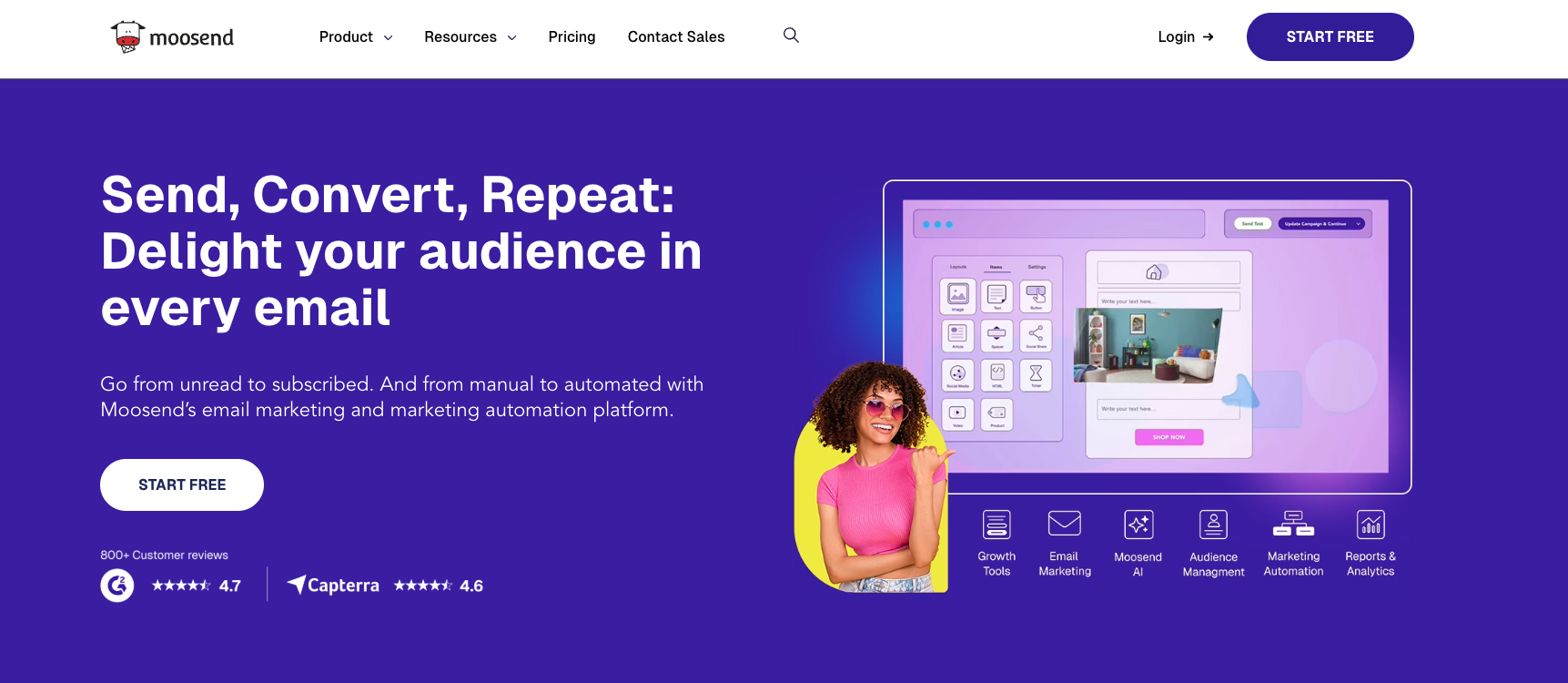 Pricing starts at $9 a month for 500 contacts, and the automation builder is surprisingly capable for the cost. Moosend dropped its permanent free plan, though, so you only get a 30-day trial. And like most generalist tools, its ecommerce integrations and revenue reporting don't reach the depth of a store-first platform like Drip.
Who Should Choose Moosend
Moosend is great for agencies and high-frequency senders who want unlimited emails on a tight budget. If you send a lot and watch every dollar, it delivers strong value.
What Are the Best Free Mailchimp Alternatives?
Not ready to pay yet? Several tools on this list offer real free plans, not just trials.
Omnisend gives small stores ecommerce automations for free up to 250 contacts. Brevo lets you store up to 100,000 contacts and send 300 emails a day at no cost. And Kit covers up to 10,000 subscribers free if you mainly need newsletters. MailerLite, AWeber, GetResponse, and HubSpot all run free tiers too, each with their own caps.
Just remember what "free" usually buys you: branding on your emails, contact limits, and shallow automation. So free is a fine place to start, but most growing brands graduate to a paid plan once email becomes a real revenue channel. Drip skips the free plan and offers a 14-day trial instead, with no credit card required, because it's built for brands ready to sell.
How Did I Evaluate These Mailchimp Alternatives?
I ranked each platform on how deeply it integrates with your store's data, how sophisticated its automation engine is, and whether it tracks actual revenue instead of just opens and clicks. Pricing transparency and ease of use for non-technical marketers weighed heavily too. After all, the best tool in the world is useless if your team can't run it or your bill balloons without warning.
The Bottom Line
Every platform on this list can send an email. But sending email and growing revenue are two very different things.
So start with the job you're hiring the tool to do. If you publish newsletters or want the cheapest possible inbox, MailerLite, Kit, or AWeber will serve you well. If you need a broad marketing suite or a CRM bolted on, HubSpot, ActiveCampaign, or GetResponse fit the bill. And if you want generous free ecommerce features to start, Omnisend and Brevo are smart first steps.
But here's the pattern worth noticing: most of these tools were built for newsletters or general marketing, then stretched toward ecommerce. Drip was built for ecommerce from the start.
That's why the brands that switch tend to be the ones chasing revenue, not just opens. They want real-time Shopify and WooCommerce data, abandoned cart and browse abandonment flows that fire on actual behavior, and a clear view of what every email earns. If that's you, Drip is the clear Mailchimp alternative to beat.
Ready to see the difference? Try Drip free for 14 days. No credit card required.