
It’s no secret: Scarcity marketing works. People always want what they can’t have because they think the grass is greener on the other side.
Many marketers are already using scarcity in their email marketing, but only a few are using it right.
If you’re using scarcity in your marketing, chances are I’m talking about you.
One misconception with scarcity is that you need a good discount to get readers to act.
Wrong.
In this article, I’ll show you six killer scarcity example for email so you can increase your ROI (without resorting to sleazy marketing tactics).
What is Scarcity Marketing?
Scarcity marketing is all about creating excitement and urgency, encouraging people to take quick action so they don't miss out on something incredible. It's like that highly sought-after limited edition sneaker or those exclusive concert tickets that sell out in a matter of seconds.
By restricting the availability of a product, either through limited production or time-limited offers, scarcity marketing taps into our fear of missing out and intensifies our desire for what is in high demand and difficult to obtain. It's a clever strategy that capitalizes on our longing for what we perceive as valuable and hard to come by.
In his book, Theory of Psychological Reactance, Jack Brehm recounts researching this phenomenon.
First, he placed two identical toddler toys in a room.
One had a plexiglass barrier in front of it forcing the toddlers to go around the barrier to get the item. The other toy was accessible in front of them.
You might have guessed where I’m going with this…
The most attractive toy was the one that had the barrier in front of it.
The same principle works in marketing.
Why Use Scarcity Marketing?
Scarcity marketing works because it leverages fundamental psychological principles that influence human decision-making. Here are the key reasons why businesses should incorporate scarcity into their marketing strategies:
It Triggers Psychological Reactance
In customer psychology, scarcity creates what's known as "psychological reactance." When opportunities become less available, we lose freedom of choice. This threat to our freedom makes us want the item even more than before.
As Jack Brehm explains: "The theory holds that a threat to or loss of freedom motivates the individual to restore that freedom."
It Activates the Fear of Missing Out (FOMO)
According to research from Strategy Online, 60% of millennial consumers make reactive purchases after experiencing FOMO, most often within 24 hours. No one wants to feel left out, especially if a good deal or exclusive product is up for grabs.
It Increases Perceived Value
We tend to associate limited availability with exclusivity and quality. If things are difficult to get, we assume it's because they're better than the alternatives. Consumers use an item's availability as a mental shortcut to judge product quality.
It Accelerates Decision-Making
In his book Influence: The Psychology of Persuasion, Robert Cialdini argues that the idea of potential loss plays a significant role in how we make decisions. People are often more motivated by the prospect of losing something than gaining something of equal value.
It Drives Immediate Action
Scarcity eliminates the "I'll think about it" response. When faced with limited availability or time constraints, customers shift from consideration mode to action mode, reducing cart abandonment and increasing conversion rates.
What Are the Types of Scarcity Marketing?
Scarcity marketing comes in several distinct forms, each leveraging different psychological triggers to drive customer behavior. Understanding these types helps you choose the right approach for your product and audience.
Time-Based Scarcity
Time-based scarcity creates urgency by limiting when customers can purchase a product or access a special offer. This includes:
- Flash sales with countdown timers
- Limited-time discounts or promotions
- Early bird pricing that expires
- Seasonal or holiday-specific offers
- Same-day delivery cutoff times
Time scarcity works because it forces customers to make immediate decisions or risk missing the opportunity entirely.
Quantity-Based Scarcity
Quantity-based scarcity restricts how many items are available. This approach includes:
- "Only X items left in stock" notifications
- Limited production runs
- Numbered editions (e.g., "1 of 100")
- First-come, first-served offers
- Limited enrollment or registration
This type of scarcity taps into competitive instincts—customers know that if they don't act, someone else will claim what they want.
Access-Based Scarcity
Access-based scarcity limits who can purchase a product or service. Examples include:
- Exclusive member-only sales
- VIP early access periods
- Invitation-only product launches
- Geographic restrictions
- Device-specific promotions
This creates a sense of privilege and exclusivity, making customers feel special when they gain access.
Bonus or Feature Scarcity
This type limits additional value rather than the product itself:
- Limited-time bonus items with purchase
- Expiring free shipping offers
- Time-sensitive add-on features
- Disappearing product bundles
- Temporary upgrades or samples
Bonus scarcity works well because it doesn't devalue your core product while still creating urgency.
Hybrid Scarcity
Many successful campaigns combine multiple scarcity types for maximum impact. For example:
- "Only 50 units available for the next 24 hours" (quantity + time)
- "Members-only early access to our limited collection" (access + quantity)
- "Order by 5 PM today to get a free bonus item" (time + bonus)
The key is ensuring your scarcity is genuine and aligns with your brand values. Fake scarcity damages trust and long-term customer relationships.
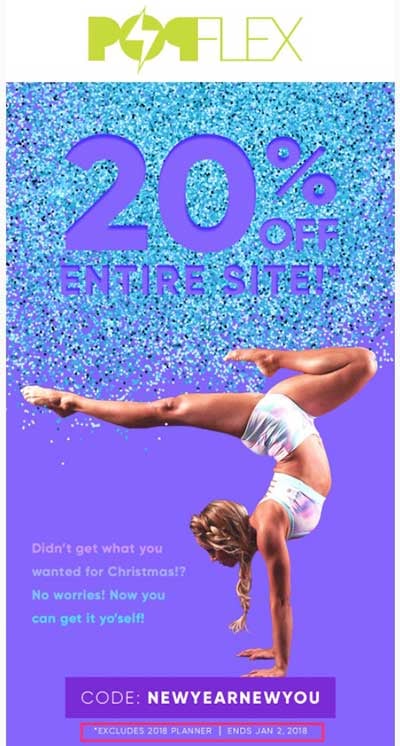
Send These 6 Scarcity-Driven Emails to Boost Sales
The use of scarcity in email marketing usually looks like this:
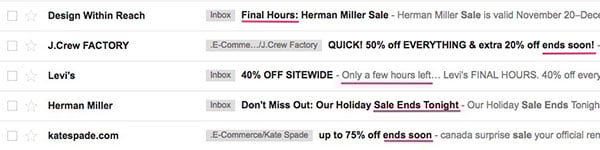
(This is an actual screenshot of my inbox—no kidding)
There’s a sale and it ends soon. The majority of consumers receive so many of these “sale ends soon” emails that they’ve developed a blindness for this type of scarcity.
If you offer discounts, often, potential buyers come to expect it, and the scarcity of your offer is no longer as compelling.
So what should you do instead?
1. The Few-Items-Left Tactic
Another effective scarcity marketing tactic is the “few items left” tactic.
Building on the previously mentioned research, Jack Brehm developed the psychological reactance theory to explain the human response to diminishing personal control.
“The theory holds that a threat to or loss of freedom motivates the individual to restore that freedom.” — Jack Brehm
When opportunities become less available we lose the freedom of choice. And when our choices are limited or threatened, our need to keep that freedom makes us want the item even more than before.
Bottom line?
Email prospects to let them know that some of your most popular items are selling out fast to increase the likelihood of them buying.
Here’s an example from Death Wish Coffee:
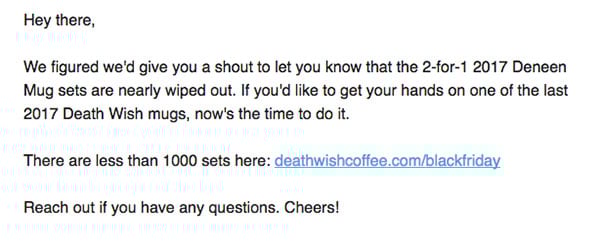
They let prospects know that the item is almost sold out. And if they want to get their hands on one, they should take action now.
Now is the keyword here. Not tonight, tomorrow, or next week, but now.
They’ve also included the number of items left to ramp up the urgency.
This strategy is spot on. Inform people of the number of items left in stock and they’ll be more likely to buy to avoid missing out.
You can also apply this to your abandoned cart emails. If a prospect abandons their cart, send them an email letting them know that the item is selling fast. If they want the item, they’ll need to buy now, before it’s too late.
Here’s an example from Beardbrand:
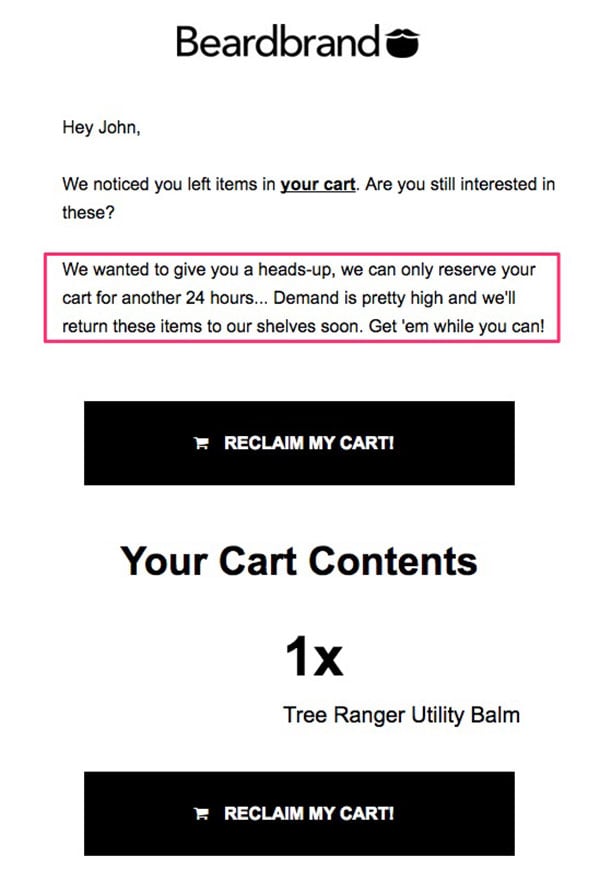
Here, I’ve already shown an interest in the specific products I left in my cart. By adding scarcity to your email, you increase people will return to complete their order.
2. The Limited-Introductory-Price Tactic
When you use discounts to increase sales, you need to find the right balance. You don’t want to offer them too often as they will only decrease the perceived quality of your product.
One way of using discounting profitably with scarcity is launching a new product.
Whether it’s a beta program you need testers for or a new sweat-repelling invention in sports apparel, you need to give people an incentive to try it out.
You don’t have any product reviews or feedback to rely on for proven effectiveness of the product. So, it’s a good idea is to offer an early bird discount to get new prospects to try your product.
In this email, from Tim Grahl, he notifies readers it’s there last chances to lock in their early-bird pricing:
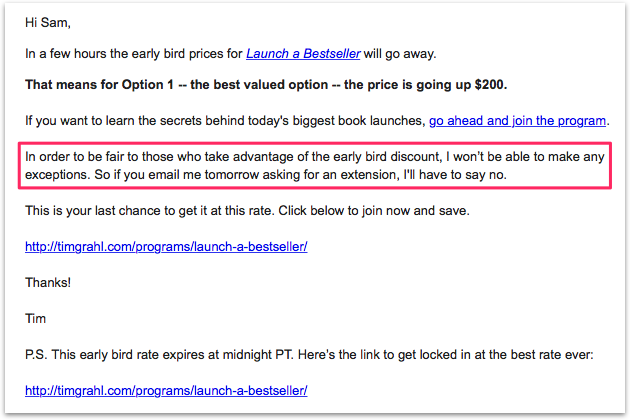
Remember, tell people it’s a one-time offer. And if they want to get your product at the introductory price, they need to take action now.
3. The Limited-Bonuses Tactic
In customer service, people always talk about giving your customers “that little extra.”
Combining this with scarcity can have a great impact on your sales.
Offer your prospects a freebie if they buy more than one item, or if they buy specific products.
Here’s an example from Poo Pourri:
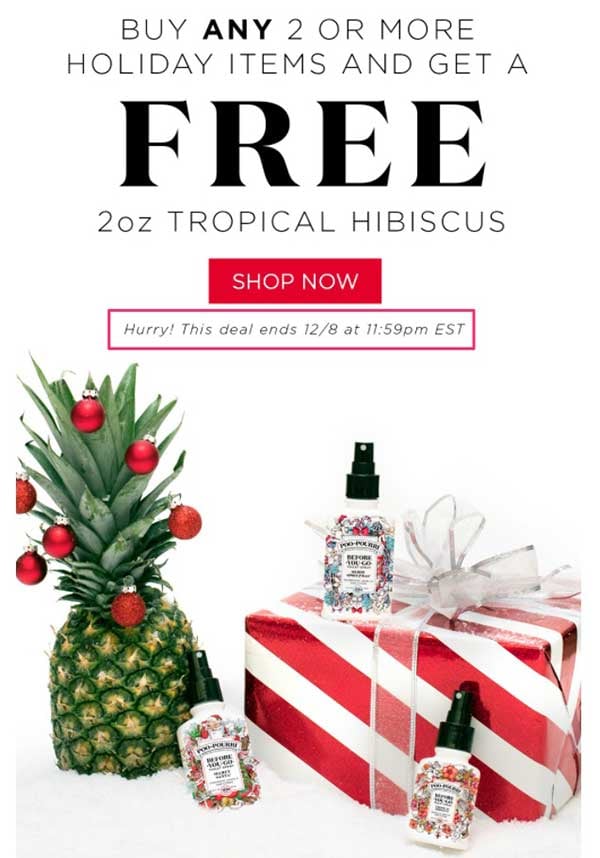
They offer a free product when customers buy two or more holiday products. Further, they include scarcity by mentioning it’s time-sensitive (the offer ends at midnight.)
Offering a free product isn’t always the best tactic if you sell luxury items with a high price range. Then we’re back to the perceived quality of your product diminishing because you’re giving it away for free.
Another option is to offer a free resource or service related to your product.
If you sell high-end electronics, you could email a promotion for expensive televisions. Then, you can include a bonus such as a free installation, or 3-months free Netflix if they buy now.
If you sell expensive sports equipment you could offer a free training guide.
The opportunities are endless as long as you remember to include scarcity and a reason to buy now.
4. The Order-Before-XX-Today Tactic
Consumers today aren’t only demanding—they’re also becoming more impatient.
According to one recent study, 38 percent of people said technology had made them less patient than they were five years ago.
This puts more pressure on businesses to keep up with deliveries and shipping time.
Thus, things such as “next-day-delivery” are in high demand among consumers.
So, if you have the possibility of offering “next-day-delivery” you already have an advantage over the competition. And by including scarcity, you’ll be able to sell even faster.
Check out this example from Firebox:
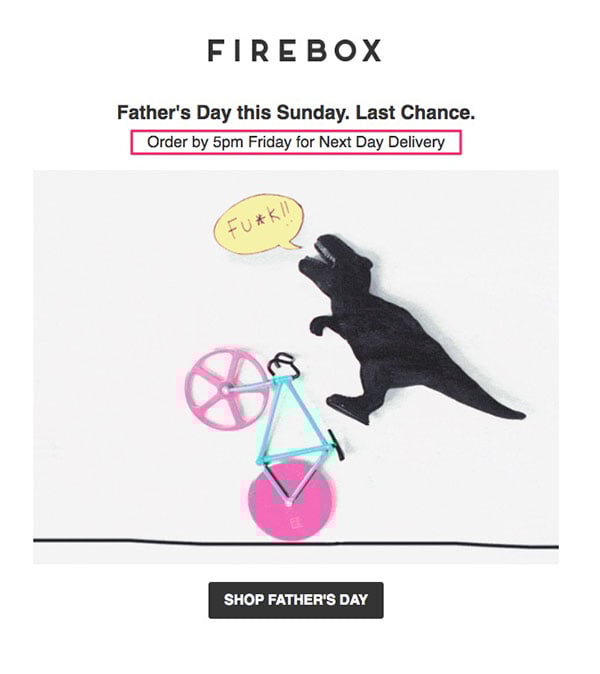
By adding “order by 5 pm”, they encourage readers to take action if they want to get their items the next day.
5. The Limited-Products Tactic
Crystal Pepsi…
Heinz purple-colored ketchup…
Cinn*A*Burst Gum…
…all items that, in hindsight, weren’t noteworthy. But now? They are highly sought after because they’re no longer available.
Once again, when we’re presented with the prospect of losing our freedom of choice, we do what we can to avoid that loss.
In other words, if you have a product that you only produce in limited quantities, use that scarcity to sell more.
It’s not that people are afraid they won’t get the product. They’re also afraid they won’t have the choice to buy the product.
There are two ways to use the “limited products” tactic.
The first is notifying prospects that a popular item is back in stock, but will be sell-out soon.
Chubbies illustrate this well:
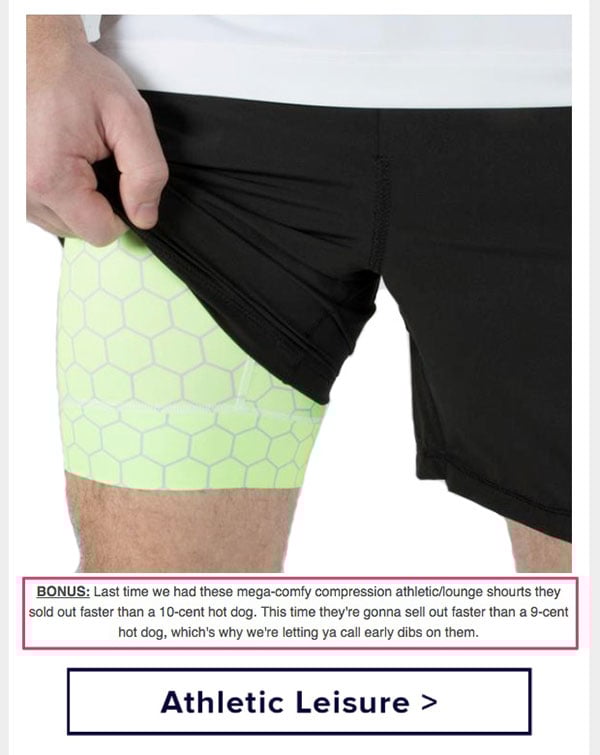
They tell readers that the chance of getting these is slim, so they must be quick if they want to claim a pair.
The other option is to promote your products in advance and encourage potential customers to pre-order if they want one.
It’s important that you include the number of products you’re producing to emphasize the limited availability.
6. The Device-Limited-Sale Tactic
With 37% of shoppers (age 18-24) doing most of their shopping on mobile devices, a device-specific sale can give your sales a bump in the right direction.
Send out an email to your list and tell them that you have a limited offer for them if they buy on mobile or through your app.
Here’s an example from Birchbox:
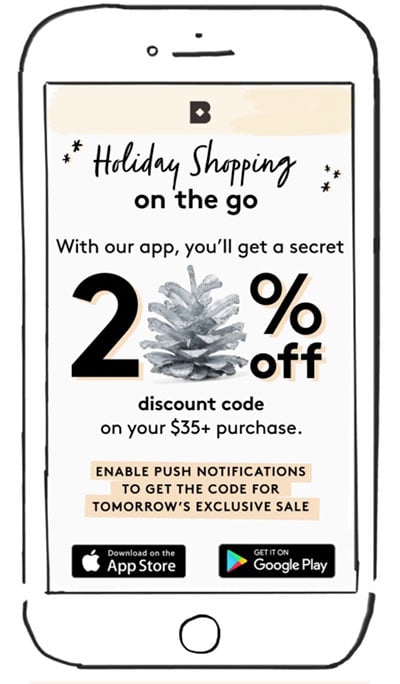
Because the discount is only available via mobile, it feels more exclusive than a regular one.
If you include a time limitation to your offer or another incentive to get people to buy now it can drive even more sales and engagement.
Conclusion
Everyone’s doing time-limited sales nowadays. So, if you want to stand out from the competition, you need to take your scarcity marketing to a new level.
If you believe in your product there’s no reason to host time-limited sales every other week to get people to buy.
Instead, use some of the above strategies and focus on the exclusivity of your product. Get people to buy now instead of later (read: never) and watch your sales soar.
Ready to implement scarcity marketing in your email campaigns?
Drip's automation tools make it easy to trigger urgent messages based on inventory levels, cart abandonment, and more. Start your 14-day free trial.