Shopping for marketing automation platforms is overwhelming. Every tool claims to do everything, the pricing pages hide the real costs, and half the "best of" lists just rank whoever pays the biggest affiliate commission.
So let's do this differently. Instead of crowning one universal winner, I'll show you which platform actually fits your business, because a scrappy DTC brand and a 200-person B2B company need very different things.
The short answer? If you run an ecommerce store and want automation that ties directly to revenue, Drip is your best bet. If you're B2B or enterprise, a few others on this list will serve you better, and I'll tell you exactly when.
What You'll Find in This Post
- The Best Marketing Automation Platforms at a Glance
- 1. Drip: Best for ecommerce and DTC brands
- 2. HubSpot: Best for B2B and sales alignment
- 3. Klaviyo: Best for enterprise, data-heavy ecommerce
- 4. ActiveCampaign: Best for advanced B2B automation
- 5. Mailchimp: Best for beginners
- 6. Brevo: Best for budget multichannel
- 7. Omnisend: Best for SMS-first ecommerce
- 8. Marketo: Best for enterprise B2B
- 9. Salesforce Marketing Cloud: Best for large enterprises
- How I Evaluated These Marketing Automation Platforms
- The Bottom Line
The Best Marketing Automation Platforms at a Glance
| Platform | Best for | Starting price | Ecommerce depth |
|---|---|---|---|
| Drip | Ecommerce and DTC revenue automation | $39/mo (all features included) | Built for ecommerce |
| HubSpot | B2B and sales-marketing alignment | $20/seat/mo (Pro ~$890/mo) | Limited |
| Klaviyo | Enterprise, data-heavy ecommerce | $20/mo (CDP add-on from ~$500/mo) | Strong |
| ActiveCampaign | Advanced B2B automation | $15/mo | Moderate |
| Mailchimp | Beginners and newsletters | $13/mo (limited free tier) | Basic |
| Brevo | Budget multichannel teams | $9/mo (billed by emails sent) | Moderate |
| Omnisend | SMS-first ecommerce | $16/mo | Strong |
| Marketo | Enterprise B2B demand gen | Quote-based (enterprise) | Minimal |
| Salesforce Marketing Cloud | Large enterprises on Salesforce | Quote-based (enterprise) | Moderate |
Let me walk you through each one so you can find your fit fast.
1. Drip: The Best Marketing Automation Platform for Ecommerce
Drip is an ecommerce marketing automation platform, not a generic email tool with a store plugin bolted on. It's built to ingest purchase data, catalog info, and browsing behavior, then turn all of that into automated, personalized revenue.
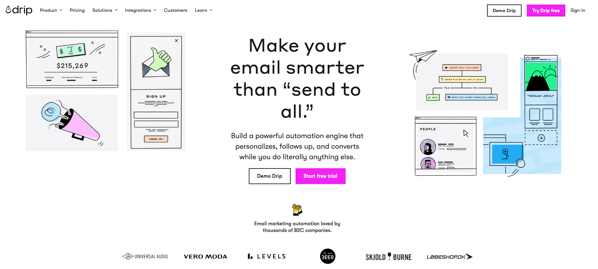
So what makes it different? Most email tools measure success in opens and clicks. Drip measures it in Revenue Per Person, Average Order Value, and customer lifetime value. That shift matters, because opens don't pay your bills.
The Visual Workflow Builder is where it shines. You map customer journeys with branching logic, Goals, and split tests, then let pre-built Playbooks like Abandoned Cart, Browse Abandonment, and Win-Back run on autopilot. And the Goal nodes are smart enough to pull someone out of a cart sequence the moment they buy, so nobody gets that awkward "you forgot something" email after they've already checked out.
It also goes deep on the platforms you actually sell on. Native, real-time sync with Shopify, WooCommerce, and BigCommerce means your segments update the instant a customer's behavior changes. Onsite popups, slide-ins, and Spin-to-Win come included too, thanks to Drip's Sleeknote acquisition. And brands feel it: Nifty Gifts saw a 77% revenue increase in their first two months, while Mythologie Candles attributed 60 to 80% of revenue to email.
Where Drip Falls Short
Drip isn't the cheapest option here. At $39 a month it's pricier than freemium tools. It's also unapologetically built for ecommerce, so if you're a pure B2B shop, you'll get more from a tool further down this list.
Who Should Choose Drip
You sell products online and you're tired of treating email like a megaphone instead of a revenue channel. You want every workflow tied back to dollars, deep store integration out of the box, and transparent pricing where all features come standard. If that's you, Drip is the clear pick.
2. HubSpot: Best for B2B and Sales Alignment
HubSpot is the heavyweight of all-in-one marketing automation platforms, and it earns that reputation in B2B. If your sales and marketing teams need to live in the same system, with a genuinely strong CRM underneath, few tools do it better.
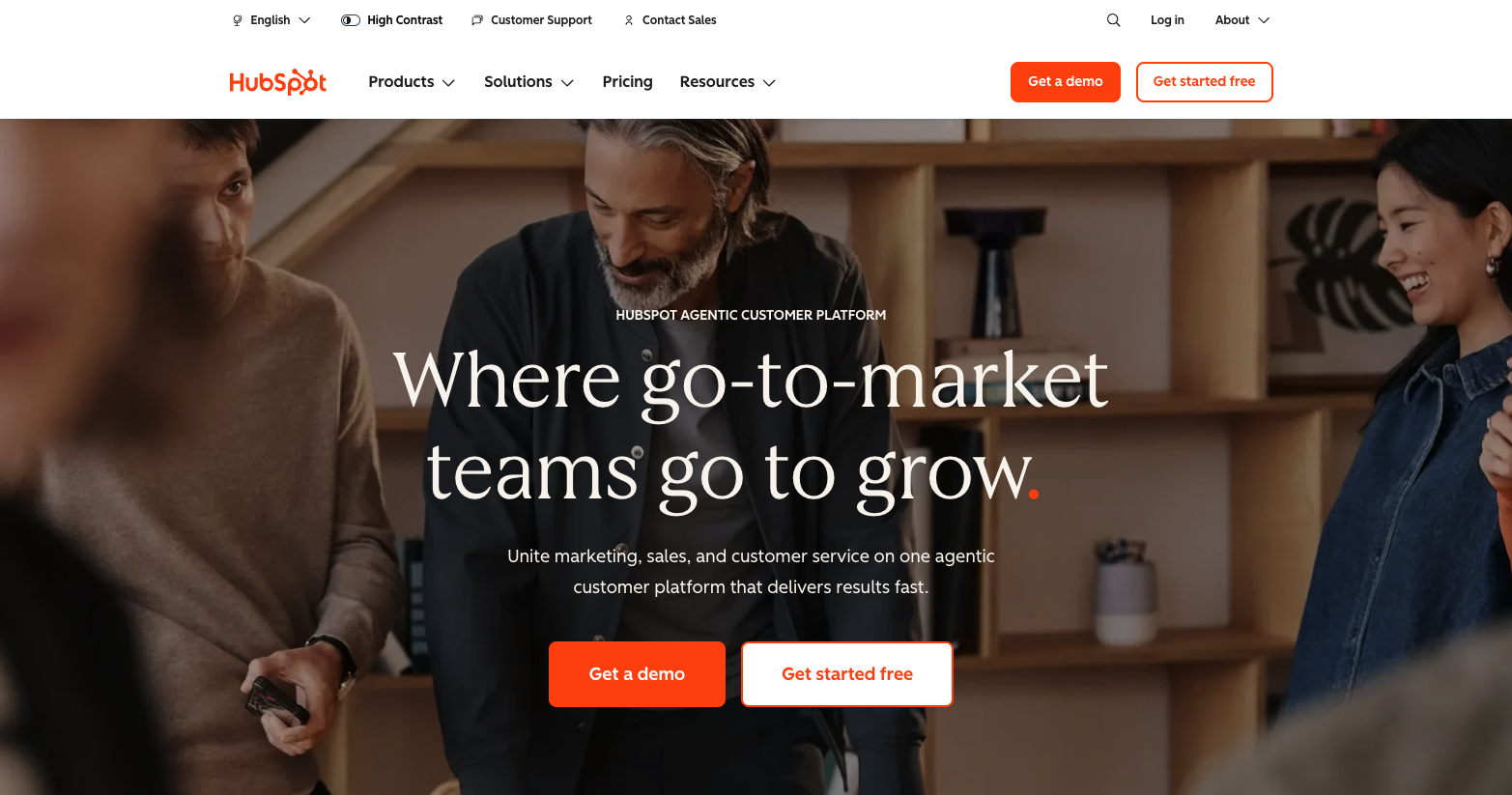 The automation, reporting, and lead-scoring tools are excellent for longer B2B sales cycles. But that power comes at a steep price. Marketing Hub Professional starts around $890 a month and carries a mandatory onboarding fee in year one, a serious jump from the $20 Starter tier.
And here's the catch for ecommerce: HubSpot is built around contacts and deals, not products and orders. You can make it work for a store, but you'll fight the tool to get the catalog sync and revenue attribution that ecommerce-native platforms give you by default.
Who Should Choose HubSpot
You're a B2B or services business with a real sales team, longer deal cycles, and the budget to match. If marketing-to-sales handoff is your priority, HubSpot is hard to beat.
3. Klaviyo: Best for Enterprise, Data-Heavy Ecommerce
Klaviyo has become the enterprise data platform of ecommerce marketing. It's powerful, deeply analytical, and increasingly built for large brands with serious data operations behind them.
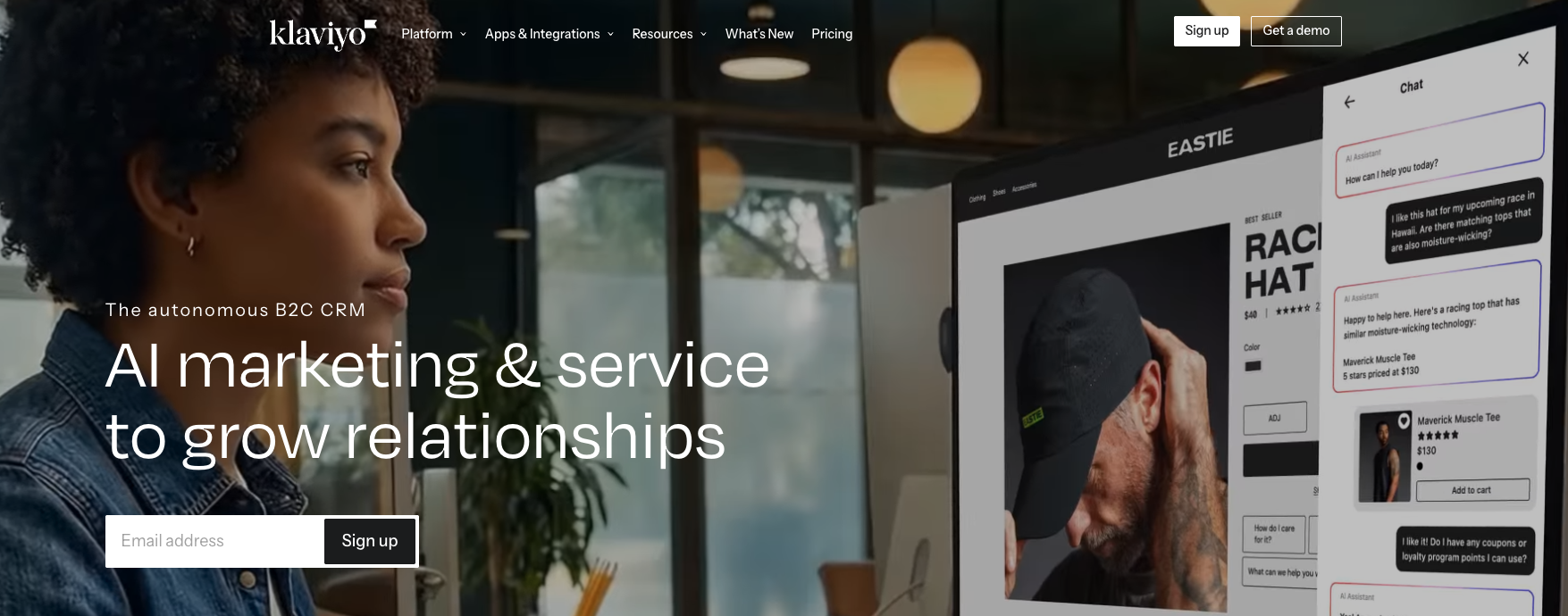 That direction is now explicit. In late 2025 Klaviyo rebranded its customer data platform to the Klaviyo Data Platform, with pricing that starts around $500 a month at 100,000 profiles and climbs into the thousands as you scale. So the real value unlocks when you have the data volume, and the data team, to feed it. For a high-volume brand running predictive analytics and complex segmentation, that's a genuine strength.
But that same heft is the catch for everyone else. Klaviyo carries a steeper learning curve, and many teams without a dedicated specialist find it harder to master. In fact, several brands we've worked with switched to Drip citing exactly that ease-of-use gap, plus pricing that stayed predictable as they grew.
Who Should Choose Klaviyo
You're an enterprise or high-volume ecommerce brand with the data team to run a CDP and the budget to match. If data depth is your priority and you have the resources to operate it, Klaviyo fits.
4. ActiveCampaign: Best for Advanced B2B Automation
ActiveCampaign is one of the most flexible automation engines on the market. If you love building intricate, multi-branch workflows, you'll feel right at home.
 Pricing is approachable up front, with a Starter plan around $15 a month, though costs climb as your contact list grows and you add CRM, SMS, or predictive features. The deeper tiers unlock genuinely sophisticated lead scoring and conversion attribution.
But ActiveCampaign serves a broad, B2B-heavy audience. So while the automation is strong, it lacks the purpose-built ecommerce depth (dynamic product blocks, real-time catalog sync) that product-based retailers need. You can bridge the gap with integrations, but it's not native.
Who Should Choose ActiveCampaign
You're a B2B business or a do-it-yourself marketer who wants maximum control over complex automation logic, and ecommerce-specific features aren't your top priority.
5. Mailchimp: Best for Beginners
Mailchimp is where a lot of people start, and for good reason. It's familiar, friendly, and easy to get an email out the door.
 Paid plans start around $13 a month, and there's a free tier, though as of early 2026 the free plan dropped to 250 contacts with automation stripped out. So the moment you want real workflows, you're paying.
The bigger issue for stores is that Mailchimp was born as a newsletter tool. It has added ecommerce features over the years, but it still lacks the granular revenue attribution and behavioral triggering that serious online sellers rely on.
Who Should Choose Mailchimp
You're just starting out, sending mostly broadcast newsletters, and you value simplicity over revenue-grade automation. It's a fine first step you may eventually outgrow.
6. Brevo: Best for Budget Multichannel
Brevo (formerly Sendinblue) is the value pick. It bundles email, SMS, WhatsApp, and a basic CRM into one affordable package.
 What's clever is the pricing model. Brevo charges by emails sent rather than contacts stored, starting around $9 a month, so if you have a big list but mail it infrequently, you can save real money. The free tier is generous too.
The trade-off is depth. Brevo's automation and ecommerce reporting are lighter than the specialists here, so fast-scaling stores may hit the ceiling. But for the price, it covers a lot of ground.
Who Should Choose Brevo
You're cost-conscious, want multichannel messaging in one place, and don't need the deepest automation on the market. Brevo delivers strong value for small and growing teams.
7. Omnisend: Best for SMS-First Ecommerce
Omnisend is built squarely for ecommerce, with email and SMS treated as equal citizens. If text messaging is central to your strategy, it's worth a serious look.
 Pricing starts around $16 a month and includes ecommerce-focused features like SMS and push notifications, with unlimited email sends on higher tiers. The pre-built ecommerce workflows are solid and quick to launch.
Where Omnisend lags is the sophistication of its segmentation and personalization compared to Drip or Klaviyo. And like most contact-based tools, the cost can climb as your list grows and you add channels.
Who Should Choose Omnisend
You're an ecommerce brand that wants SMS and email working together from day one, with minimal setup. It's a strong, focused option for SMS-led stores.
8. Marketo: Best for Enterprise B2B
Marketo (now part of Adobe) is enterprise B2B marketing automation, full stop. It's built for large demand-generation teams running complex, multi-touch campaigns.
 The lead management, account-based marketing, and analytics are genuinely enterprise-grade. Pricing is quote-based and lands well into enterprise territory, with implementation that typically requires dedicated resources or an agency.
For an ecommerce brand, it's overkill in the wrong direction. Marketo's strengths are B2B pipeline and sales alignment, not store catalogs and cart recovery.
Who Should Choose Marketo
You're a large B2B organization with a sophisticated demand-gen team and the budget for an enterprise platform. For that buyer, Marketo is a proven workhorse.
9. Salesforce Marketing Cloud: Best for Large Enterprises
Agentforce Marketing (formerly Salesforce Marketing Cloud) is the enterprise giant, and it makes the most sense if you already live inside the Salesforce ecosystem.
 The power is undeniable: deep customer data, cross-channel journeys, and tight integration with the Salesforce CRM. But that power comes with complexity, quote-based enterprise pricing, and an implementation that usually needs specialists.
So for most small and midsize ecommerce brands, it's far more platform than you need, and the time-to-value is long. It's a strategic investment, not a quick win.
Who Should Choose Salesforce Marketing Cloud
You're a large enterprise already standardized on Salesforce, with the team and budget to implement and maintain it. In that context, the unification is a real advantage.
How I Evaluated These Marketing Automation Platforms
I weighed each platform on how deeply it integrates with your customer data, how sophisticated its automation engine is, and whether it actually tracks revenue instead of just opens and clicks. Pricing transparency and ease of use mattered too, because the most powerful tool is useless if your team can't master it. Most importantly, I matched each one to the buyer it genuinely serves best, rather than forcing a single winner.
The Bottom Line
There's no single best platform on this list. There's only the best one for the business you're actually running.
If your world is B2B, long sales cycles, and tight sales-marketing handoff, HubSpot and ActiveCampaign are built for that. If you're a large enterprise with a data team and an implementation budget, Marketo and Salesforce Marketing Cloud earn their keep. And if you're just getting started or watching every dollar, Mailchimp, Brevo, and Omnisend will get you moving.
But notice the pattern. The further down that list you go, the more your store's data becomes an afterthought instead of the engine.
That's the gap Drip was built to close. It treats your purchase history, browsing behavior, and catalog as the raw material for every automation, then ties each one back to actual revenue instead of opens and clicks. You get the deep Shopify and WooCommerce sync, the visual workflows, and the onsite popups in one place, with every feature included at every plan.
And the results show up where it counts. Nifty Gifts grew revenue 77% in two months. Mythologie Candles now attributes 60 to 80% of its revenue to email. Not because they sent more emails, but because they sent the right ones automatically.
So if you sell online and you want marketing automation that behaves like a revenue engine, not a glorified newsletter tool, Drip is the one to beat.
Ready to see the difference? Try Drip free for 14 days. No credit card required.