
Picking an email platform shouldn't feel like a research project, yet here you are with two strong contenders and a dozen open tabs. The Omnisend vs Klaviyo question keeps coming up for a reason. Both were designed for online stores, so the usual "ecommerce vs newsletter" shortcut doesn't help you decide.
The real difference is what you're optimizing for. One leans into raw data and depth. The other leans into value and speed.
Below, I'll walk through how each platform actually performs, who it fits, and where it can quietly hold your store back.
The short answer? Klaviyo is the stronger choice if you want maximum segmentation depth, predictive analytics, and the widest integration library, while Omnisend is the better value if you want multichannel messaging, a generous free tier, and lower bills as your list grows.
Yet many stores want depth without the price tag or the learning curve, and a purpose-built option like Drip often hits that middle ground with all features included at a flat rate.
What You'll Find in This Post
Klaviyo vs Omnisend at a Glance
Before I go deep, here's the quick view on the factors that decide most store owners' choice.
| Feature | Klaviyo | Omnisend |
|---|---|---|
| Best for | Data-led brands wanting maximum control | Lean teams wanting value and quick wins |
| Built for ecommerce | Yes, store-first from day one | Yes, store-first from day one |
| Automation depth | Very deep, highly customizable flows | Solid prebuilt flows, less granular |
| Segmentation | Granular, with predictive analytics | Strong basics, fewer advanced filters |
| Channels | Email, SMS, push (mobile app) | Email, SMS, web push, all included |
| SMS cost | Priced higher per send | Bundled credits, cheaper per send |
| Ease of use | Powerful but a steeper climb | Fast to learn, quick to launch |
| Free plan | Up to 250 contacts, email focus | Up to 250 contacts, SMS and push too |
| Cost at 10k subscribers | Roughly $240 per month | Roughly $130 per month |
The summary points one way, but the lived experience depends on how complex your marketing gets and how fast your list scales.
Klaviyo: The Data-Driven Powerhouse
Klaviyo earned its name by treating your store data as the engine of everything. It syncs orders, browsing, and lifetime value, then lets you fire emails and texts off almost any signal a shopper gives you. If you love digging into numbers, it's a playground.
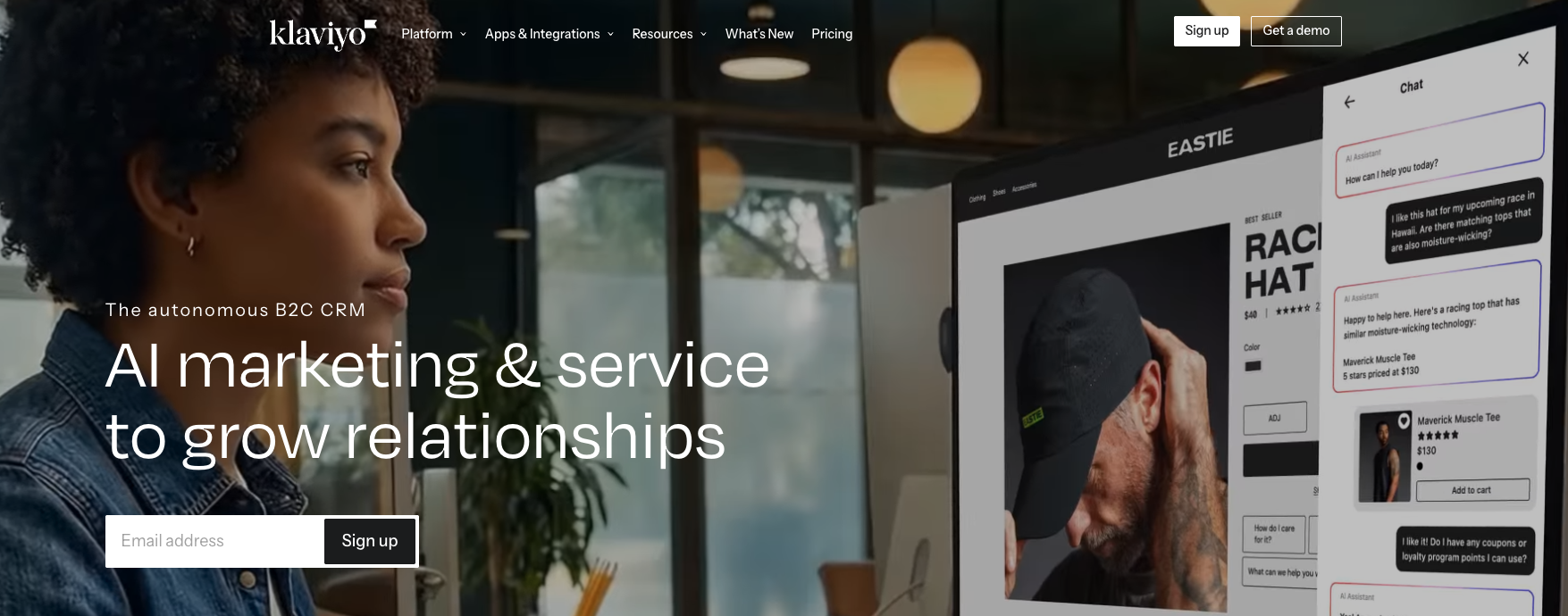 Where it really pulls ahead is intelligence. Predictive analytics estimate things like expected next order date and churn risk, and the segmentation engine lets you stack conditions until you've isolated exactly the buyers you want. Pair that with the largest integration catalog in the category, and advanced marketers get room to run.
Native SMS and push round out the picture, so you can coordinate channels from one account. For a brand with the time and talent to operate it, Klaviyo is hard to outgrow.
The catch is the trade-off that power demands. The platform can feel dense for a small team, and onboarding often takes longer than people expect. And the monthly cost accelerates as your billable profile count rises, with 2026 still offering no yearly plan to blunt that increase, which sends plenty of stores searching for Klaviyo alternatives.
Who Should Choose Klaviyo
Klaviyo fits established brands with a dedicated email owner and a healthy budget. If predictive data and near-infinite behavioral automation are non-negotiable, and complexity doesn't scare you, it's a top-tier pick.
Omnisend: The Value-First Multichannel Pick
Omnisend takes the opposite approach. It packs email, SMS, and web push into one tidy package and prices it to win on value, which makes it a favorite among smaller and mid-size stores watching every dollar.
 Setup is refreshingly quick. The prebuilt automations for welcome, cart recovery, and post-purchase get you live fast, and the editor stays out of your way. Its free plan is notably generous too, bundling a slice of SMS and push alongside email rather than locking everything behind a paywall.
SMS is a standout. Credits come bundled into the plans and the per-message cost runs lower than Klaviyo's, so multichannel campaigns don't blow up your budget. For a store that wants email and text working together without a finance meeting, that matters.
The ceiling shows up as you scale. Segmentation covers the essentials well but offers fewer advanced filters, the automation logic is less granular than Klaviyo's, and the reporting won't satisfy a data-obsessed team. Growth-stage brands chasing deeper personalization sometimes start weighing other ecommerce email platforms once their needs outpace the basics.
Who Should Choose Omnisend
Omnisend is a smart call for newer and budget-conscious stores that want multichannel reach without complexity. If you value fast setup, bundled SMS, and predictable pricing more than deep customization, it delivers.
Where Both Platforms Leave Money on the Table
Here's what the Omnisend vs Klaviyo debate tends to gloss over. You're not just choosing a tool. You're choosing which compromise you can live with.
Go with Klaviyo and you get serious depth, but you pay for it twice, once in subscription cost and again in the hours it takes to wield well. The bill keeps climbing as your audience grows.
Go with Omnisend and you get affordability and ease, but you may hit a wall on advanced segmentation and automation right when your marketing gets interesting. The features that drive incremental revenue at scale are the ones it keeps light.
So what if depth and simplicity didn't have to be a trade? That's the exact opening a third option was built to fill.
A Better Fit for Ecommerce: Drip
Drip is an ecommerce marketing automation platform rather than an email tool with a store plugin bolted on. It pulls in your catalog, orders, and on-site behavior, then turns that data into automated, personalized revenue. The goal is Klaviyo-grade ecommerce capability in an interface a non-technical marketer can actually run.
 It starts with the visual workflow builder. You map each customer journey on a canvas using branching paths, conversion goals, and split testing, which means a shopper who buys after the opening reminder quietly drops out before the next message ever sends. You get the sophistication Klaviyo is known for without the dense setup that slows Omnisend users down when they reach for more.
Drip also keeps the focus on the figure that funds your business, Revenue Per Person, not just opens and clicks. Live connections to Shopify, WooCommerce, and BigCommerce keep data current, so a segment updates the moment a shopper passes a spend threshold or starts browsing a fresh collection.
Because Drip acquired Sleeknote, the onsite toolkit of popups, slide-ins, quizzes, and Spin to Win is included at every plan. You capture the address and launch the welcome flow from one place, no bolt-on app and no separate invoice.
The proof is in customer results. Spring Copenhagen lifted average order value by 32.24% and grew newsletter click-through by 96%. Nifty Gifts logged a 77% revenue jump in its first two months, with a 46% open rate on its abandoned-cart workflow. And among ten featured Drip customers, four moved over from Klaviyo, naming ease of use as the deciding factor.
Where Drip Falls Short
Drip isn't a forever-free app. Paid plans open at $39 per month, so it sits above Omnisend's free tier and the cheapest entry points. It's a premium platform aimed at brands that treat email as a revenue channel, not a side task.
Who Should Choose Drip
Drip lands right in the gap for scaling stores that need real automation but don't want Klaviyo's complexity or Omnisend's ceiling. Selling on Shopify, WooCommerce, or BigCommerce and want the full toolkit unlocked on every tier with transparent pricing? This one's for you.
Pricing Compared: Klaviyo vs Omnisend vs Drip
Pricing is where this matchup gets slippery, since each platform counts and charges differently. Here's how the three line up.
Klaviyo bills on active profiles, the people you can actually email, with its email plan starting around $20 per month for a small list and climbing quickly from there. There's no annual discount in 2026 to soften the rise, and SMS is priced as a separate, higher-cost layer.
Omnisend bills on subscriber count, with a Standard plan opening near $16 per month for email and a Pro plan that folds in SMS and higher limits. SMS credits come bundled and cost less per send, which is part of why a 10,000-subscriber store often lands around $130 per month versus roughly $240 on Klaviyo.
Drip opens at $39 per month covering up to 2,500 active people, and the same complete feature set rides along on every plan, with nothing locked behind a higher tier. People you've marked inactive don't add to the bill, and eligible brands have their migration done for them by Drip's team. For a store weighing real ecommerce muscle dollar for dollar, that flat, everything-in approach is often the cleaner math.
The Bottom Line
Either platform will get your emails out the door. Klaviyo hands you depth and intelligence at a price that grows with you, while Omnisend hands you value and multichannel ease that can run thin as your ambitions expand.
But when your goal is a revenue engine that turns shopper data into automated, personalized sales, and you'd rather skip both the complexity and the bill shock, Drip is the smarter middle path for ecommerce brands.
Ready to see the difference? Try Drip free for 14 days. No credit card required.