Omnisend is a solid email and SMS tool for ecommerce. But it's not the right fit for every brand, and once you outgrow the free plan or hit its feature gates, the search for something better begins.
Maybe you want richer automation. Maybe you want pricing that doesn't punish you for growing your list. Or maybe you just want a tool your whole team can actually use.
The short answer? For DTC and ecommerce brands that want to turn customer data into automated revenue, Drip is the best Omnisend alternative. It's purpose-built for online stores, every feature is included at every price, and it tracks real revenue, not just opens.
What You'll Find in This Post
- The Best Omnisend Alternatives at a Glance
- 1. Drip: Best for DTC ecommerce brands
- 2. Klaviyo: Best for data-heavy ecommerce teams
- 3. Mailchimp: Best for small business all-rounders
- 4. GetResponse: Best for funnels and webinars
- 5. Brevo: Best free and transactional email
- 6. Kit: Best for creators and newsletters
- 7. ActiveCampaign: Best for advanced automation
- 8. MailerLite: Best for simple, low-cost email
- 9. Constant Contact: Best for events and nonprofits
- 10. HubSpot: Best for B2B inbound marketing
- How I Evaluated These Omnisend Alternatives
- The Bottom Line
The Best Omnisend Alternatives at a Glance
Here's my ranking of the top Omnisend alternatives for ecommerce in 2026:
- Drip: Best for revenue-focused ecommerce automation
- Klaviyo: Best for data-heavy ecommerce teams
- Mailchimp: Best for small business all-rounders
- GetResponse: Best for funnels and webinars
- Brevo: Best free and transactional email
- Kit: Best for creators and newsletters
- ActiveCampaign: Best for advanced automation
- MailerLite: Best for simple, low-cost email
- Constant Contact: Best for events and nonprofits
- HubSpot: Best for B2B inbound marketing
Want the quick comparison first? Here's how each tool's starting price, free option, and ideal user line up against Omnisend.
| Platform | Best for | Free plan? | Starting paid price |
|---|---|---|---|
| Drip | DTC ecommerce revenue | No (14-day trial) | $39/mo (all features, up to 2,500 people) |
| Klaviyo | Data-heavy ecommerce | Yes (250 profiles) | $20/mo (500 contacts) |
| Mailchimp | Small business generalists | Yes (500 contacts) | $13/mo Essentials |
| GetResponse | Funnels and webinars | Yes (limited) | $19/mo (1,000 contacts) |
| Brevo | Free and transactional email | Yes (300 emails/day) | $9/mo Starter |
| Kit | Creators and newsletters | Yes (up to 10,000 subs) | $39/mo Creator (1,000 subs) |
| ActiveCampaign | Advanced automation | No (free trial) | $15/mo annual (1,000 contacts) |
| MailerLite | Simple, low-cost email | Yes (500 subscribers) | $10/mo Growing Business |
| Constant Contact | Events and nonprofits | No (free trial) | $12/mo Lite |
| HubSpot | B2B inbound marketing | Yes (limited) | $20/seat/mo Starter |
| Omnisend | Email and SMS for ecommerce | Yes (250 contacts) | $16/mo Standard |
Now let me walk you through each option so you can decide which one actually fits your business.
1. Drip: The Best Omnisend Alternative for DTC Ecommerce
Drip is an ecommerce marketing automation platform built for online stores, not a generic email tool with a few ecommerce add-ons. It's designed to pull in your purchase data, catalog, and browsing behavior, then turn all of it into automated, personalized revenue.
 So what sets Drip apart from Omnisend? Start with pricing. Omnisend gates its best features behind the $59/month Pro plan, and as of May 2026 it even pulled SMS from its lower tiers for new customers. With Drip, every feature comes included at every plan, starting at $39/month for up to 2,500 people.
Then there's the automation. Drip's visual workflow builder handles branching logic, Goals, and split testing, with pre-built playbooks for welcome series, abandoned cart, browse abandonment, and win-back. Because it syncs in real time with Shopify, WooCommerce, and BigCommerce, your segments update the moment a shopper crosses a spending threshold or abandons a cart.
And Drip measures what matters. Instead of stopping at open rates, it tracks Revenue Per Person, so you can see exactly which emails drive sales. That focus pays off: Mythologie Candles drove over $1M in sales in nine months with 60 to 80 percent of revenue attributed to email, while Nifty Gifts saw a 77 percent revenue jump in just two months. Across its customer base, Drip has attributed more than $1.5 billion in revenue for over 6,000 brands.
You also get the full onsite suite built in, with popups, slide-ins, sticky bars, Spin-to-Win, and quizzes, all powered by Sleeknote technology Drip acquired. Switching from another tool? Drip offers free migration for larger accounts.
Where Drip Falls Short
Drip isn't the cheapest option here, and there's no permanent free plan, just a 14-day trial. If you're a hobbyist or a brand sending a handful of emails a month, a freemium tool may serve you better.
Who Should Choose Drip
Drip is the right call if you run a DTC or ecommerce brand and you're serious about growth. It fits marketers who want enterprise-grade segmentation and automation without a developer on staff, and who'd rather pay one transparent price than chase features across upgrade tiers.
2. Klaviyo: Best for Data-Heavy Ecommerce Teams
Klaviyo is Omnisend's most direct rival, and a genuinely powerful ecommerce platform. Its predictive analytics, deep reporting, and granular segmentation are hard to beat if you have the technical chops to use them.
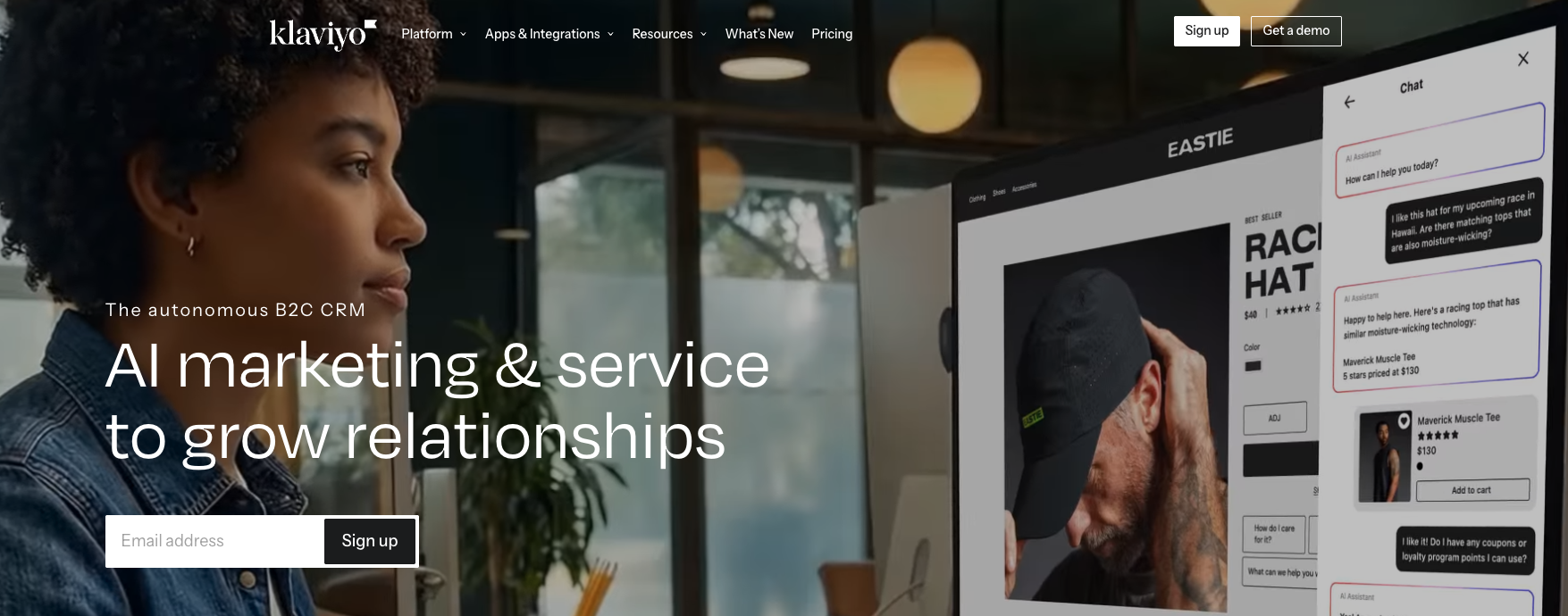 But that power comes with two catches. First, Klaviyo really shines in the hands of an in-house team or an agency, which makes it tougher for lean teams to master. Second, in 2025 Klaviyo shifted to billing on every active profile in your database, not just the contacts you email. So your bill can climb fast as your list grows, hitting around $150/month at 10,000 contacts.
Drip differentiates here on ease of use and transparent pricing. In fact, several Drip customers switched from Klaviyo specifically because it was easier to master for teams without developers.
Who Should Choose Klaviyo
Pick Klaviyo if you're a larger ecommerce brand with the budget and the technical resources to squeeze value out of its advanced analytics. For smaller teams, the learning curve and profile-based billing can sting.
3. Mailchimp: Best for Small Business All-Rounders
Mailchimp is one of the best-known email platforms around, and it's a comfortable starting point for small businesses. It offers a generous brand, a familiar interface, and a free plan for up to 500 contacts.

The trouble is that Mailchimp was built for newsletters first, not ecommerce. Its automation is locked out of the entry-level Essentials plan ($13/month), so you'll need Standard ($20/month) for branching journeys. It also bills for unsubscribed contacts and duplicates across audiences, which means most brands pay more than the sticker price.
For an online store that needs behavioral triggers and revenue attribution, Mailchimp can feel shallow. That's exactly the gap a purpose-built tool like Drip fills.
Who Should Choose Mailchimp
Mailchimp suits small businesses and non-ecommerce brands that want an easy, recognizable tool for newsletters and light automation. If ecommerce revenue is your main goal, you'll likely outgrow it.
4. GetResponse: Best for Funnels and Webinars
GetResponse is a true all-rounder that goes well beyond email. It bundles a website builder, conversion funnels, AI email tools, and built-in webinar hosting, which makes it a flexible pick for marketers who want more than a send tool.
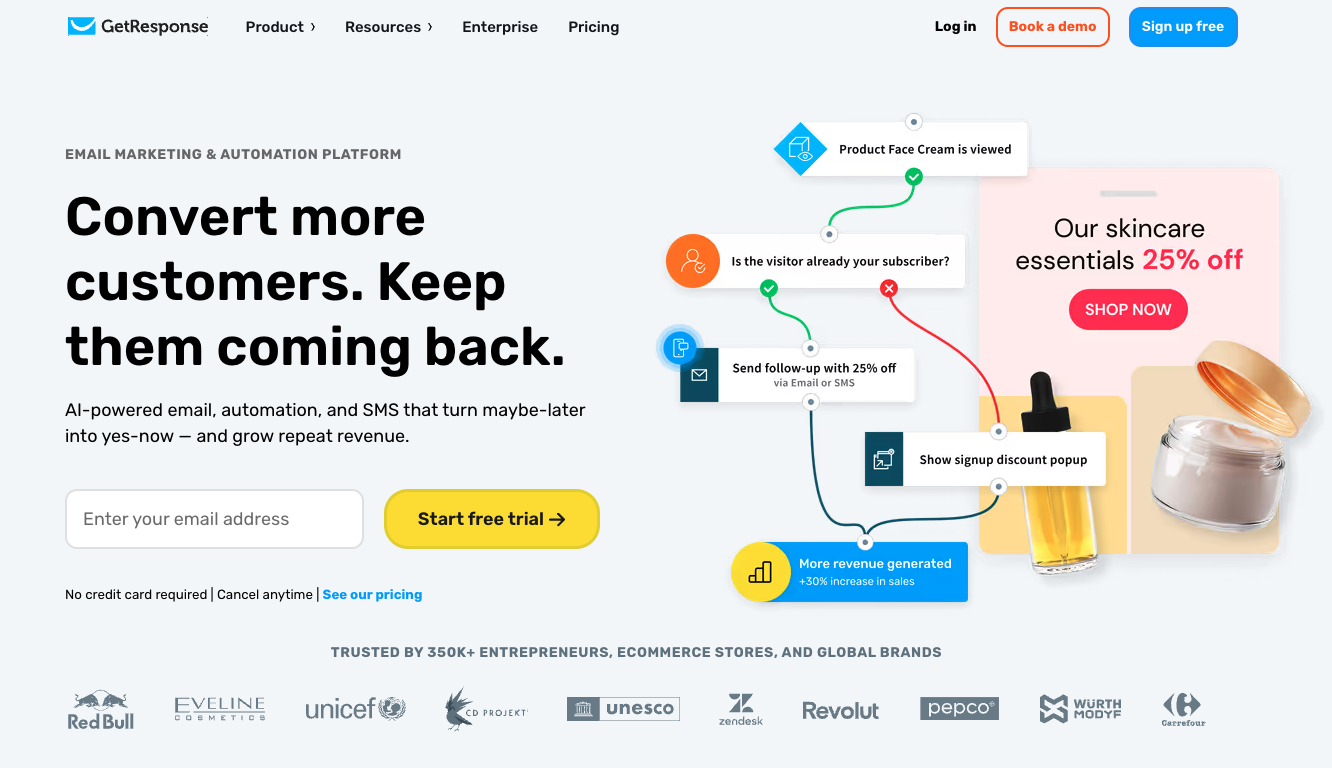 Pricing starts at $19/month for 1,000 contacts with unlimited emails, which is competitive. But GetResponse isn't ecommerce-first, and its store integrations and revenue reporting aren't as deep as Drip's. You also get bumped to the next pricing tier automatically once your list crosses a threshold.
So if your marketing leans on webinars, courses, or landing-page funnels, GetResponse earns its place. For pure ecommerce automation, it's a step behind the specialists.
Who Should Choose GetResponse
Go with GetResponse if you're a small business or creator who wants webinars, funnels, and a website builder under one roof. Ecommerce brands chasing deep store data will want something more specialized.
5. Brevo: Best Free and Transactional Email
Brevo, formerly Sendinblue, is the value champion of this list. Its free plan lets you send up to 300 emails a day to unlimited contacts, and paid plans start at just $9/month, so it's a natural fit for budget-conscious brands.
 Brevo also handles transactional email well, which matters for order confirmations and receipts, and it bills by email volume rather than list size. That's a real advantage if you store a big list but send selectively.
The trade-off is depth. Brevo's ecommerce automation and reporting are lighter than Drip's, and the most useful features like advanced reporting and A/B testing sit on the Business plan ($18/month) and above.
Who Should Choose Brevo
Brevo is ideal if you're cost-sensitive, sit on a large contact list, or need reliable transactional email. Brands that want sophisticated, revenue-driven ecommerce flows will find it limited.
6. Kit: Best for Creators and Newsletters
Kit, the platform formerly known as ConvertKit, is built for creators. Think writers, course sellers, podcasters, and newsletter operators who monetize an audience rather than a product catalog.
 Its free plan is generous for newsletters, covering up to 10,000 subscribers, and its tagging and automation are clean and creator-friendly. The paid Creator plan starts at $39/month for 1,000 subscribers, though note Kit raised prices roughly 35 percent in late 2025.
What Kit isn't is an ecommerce tool. There's no deep store integration, dynamic product blocks, or revenue attribution, so a product brand would quickly hit a wall.
Who Should Choose Kit
Kit is perfect for content creators and solo founders selling digital products or subscriptions. If you sell physical products and need store-level data, look elsewhere.
7. ActiveCampaign: Best for Advanced Automation
ActiveCampaign is an automation powerhouse with one of the most flexible workflow builders on the market. It serves a broad audience, leaning heavily B2B, and its automation logic can get impressively granular.
 Pricing starts at $15/month annually for 1,000 contacts, but several ecommerce-relevant features like attribution and conditional content live on higher tiers. And because ActiveCampaign spans so many use cases, its ecommerce integration depth doesn't match a store-first tool like Drip, which offers dynamic product blocks and real-time catalog sync out of the box.
So you trade some ecommerce specialization for broad, cross-channel automation flexibility.
Who Should Choose ActiveCampaign
Choose ActiveCampaign if you need sophisticated automation across both B2B and B2C, or if email is just one piece of a wider CRM strategy. Product-based retailers usually get more from a dedicated ecommerce platform.
8. MailerLite: Best for Simple, Low-Cost Email
MailerLite earns fans with a clean interface and prices that are tough to beat. Its free plan covers 500 subscribers, and the Growing Business plan starts at just $10/month, so it's a friendly landing spot for startups and small teams.
 The platform keeps things refreshingly simple, with a drag-and-drop editor, basic automation, and landing pages. But simplicity is also the ceiling. MailerLite doesn't offer the deep ecommerce integrations, behavioral triggering, or revenue reporting that a growing store needs to scale its marketing.
So it's a great first email tool, just one many ecommerce brands eventually outgrow.
Who Should Choose MailerLite
MailerLite is a smart pick for startups, bloggers, and small businesses that want clean, affordable email without complexity. Ambitious ecommerce brands will want more horsepower.
9. Constant Contact: Best for Events and Nonprofits
Constant Contact is a veteran of email marketing with a loyal following among nonprofits, associations, and event-driven organizations. It's approachable, and it offers handy event-management and survey tools many rivals skip.
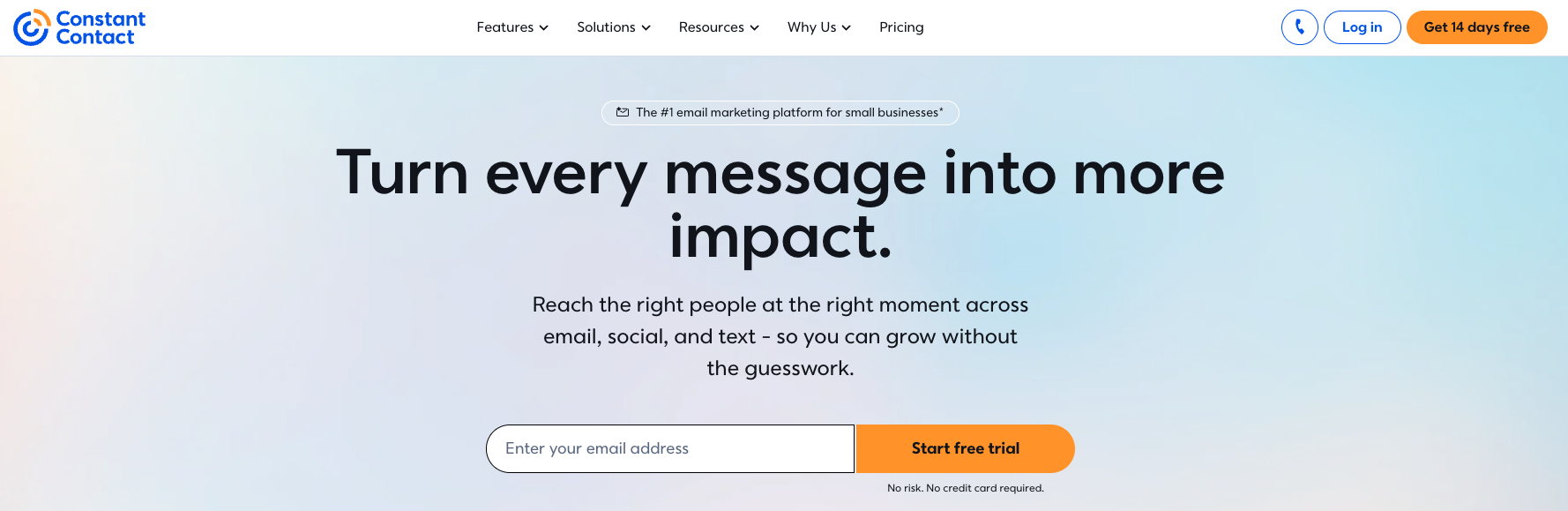 Plans start at $12/month for Lite, with Standard at $35/month adding segmentation and pre-built automations. Where it falls short for ecommerce is automation depth and store integration. Its workflows feel basic next to Drip's branching logic and Goals, and revenue attribution isn't its strength.
For a charity running fundraisers and events, that's fine. For a store chasing repeat purchases, it's a mismatch.
Who Should Choose Constant Contact
Constant Contact works best for nonprofits, charities, and organizations that run events and need simple, reliable email. Ecommerce brands will find its automation underpowered.
10. HubSpot: Best for B2B Inbound Marketing
HubSpot is the heavyweight of inbound marketing, uniting email, CRM, content, and sales tools in one ecosystem. For B2B companies that live and breathe lead nurturing, that all-in-one approach is genuinely compelling.
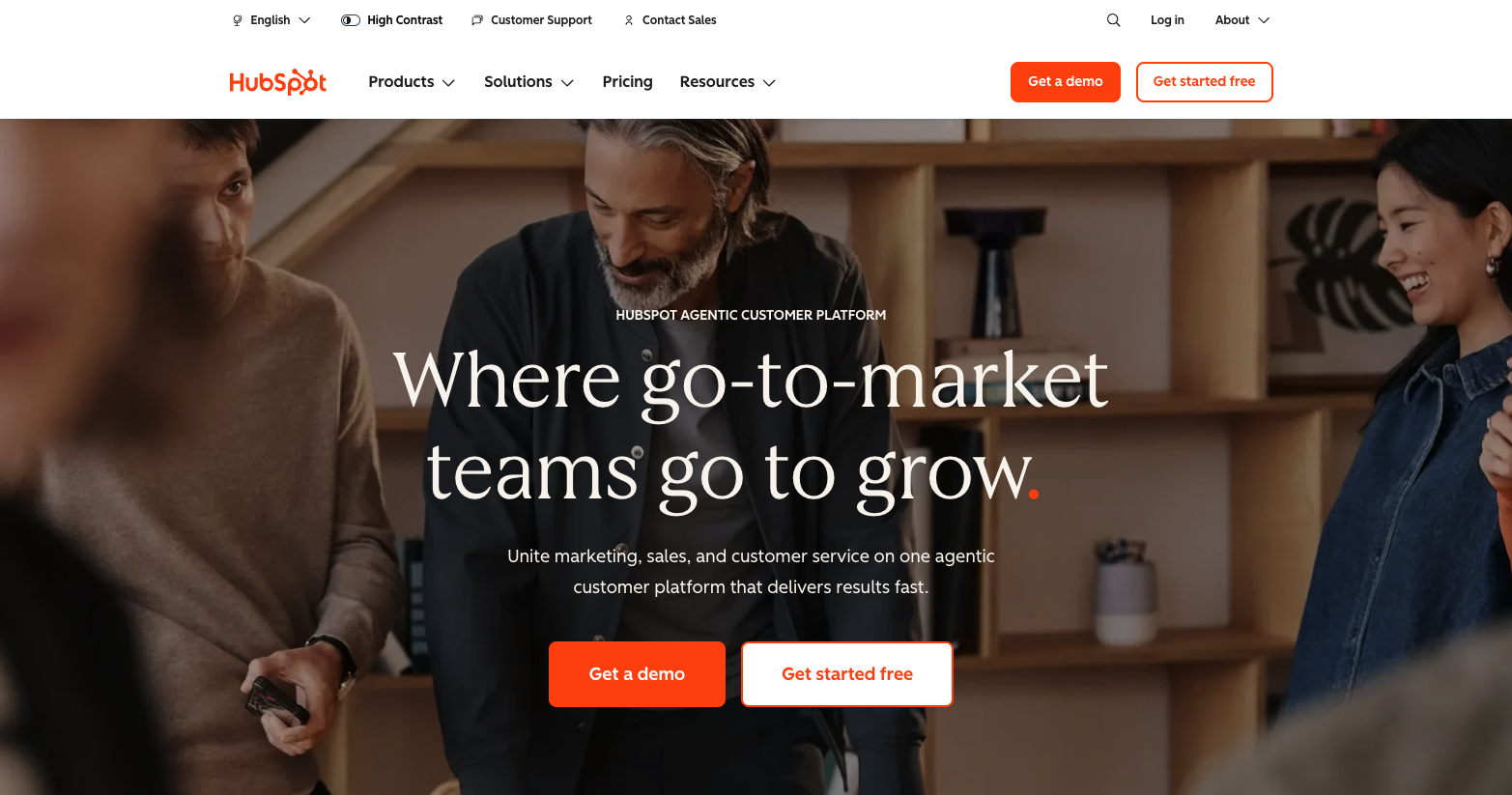 There's a free tier and a Starter plan at $20/seat per month. But the automation that matters lives on the Professional plan at $890/month, plus a one-time onboarding fee. That's a steep climb for most independent ecommerce brands. HubSpot is also built around the B2B sales funnel rather than the product catalog and purchase behavior that drive online stores.
So the firepower is real, but so is the price and the B2B orientation.
Who Should Choose HubSpot
HubSpot is the right fit for B2B companies and larger organizations that want a unified marketing, sales, and CRM platform and have the budget to match. DTC stores rarely need that complexity.
How I Evaluated These Omnisend Alternatives
I weighed each platform on how deeply it integrates with your store's data, how sophisticated its automation engine is, and whether it tracks actual revenue rather than just opens and clicks. Pricing transparency and ease of use for non-technical marketers carried real weight too, because the most powerful tool is useless if your team can't run it. Finally, I considered who each platform serves best, since the right Omnisend alternative depends entirely on your business model.
The Bottom Line
There's no single winner here, and that's the point. The right Omnisend alternative depends on what you're actually trying to build.
If you're a creator monetizing a newsletter, Kit fits. If you're a nonprofit running events, Constant Contact does the job. Watching every dollar? Brevo and MailerLite stretch a small budget a long way. And if you're a B2B team living in a sales funnel, HubSpot has the ecosystem.
But if you sell products online and you want every email, popup, and workflow pulling in the same direction toward revenue, the choice narrows fast. That's the world Drip was built for. You get store-level data, real-time segmentation, and automation that ties back to dollars, not opens, with every feature included at one honest price.
So before you migrate, get clear on one thing: are you buying a tool to send emails, or a system to grow a store? Answer that, and the right pick on this list becomes obvious.
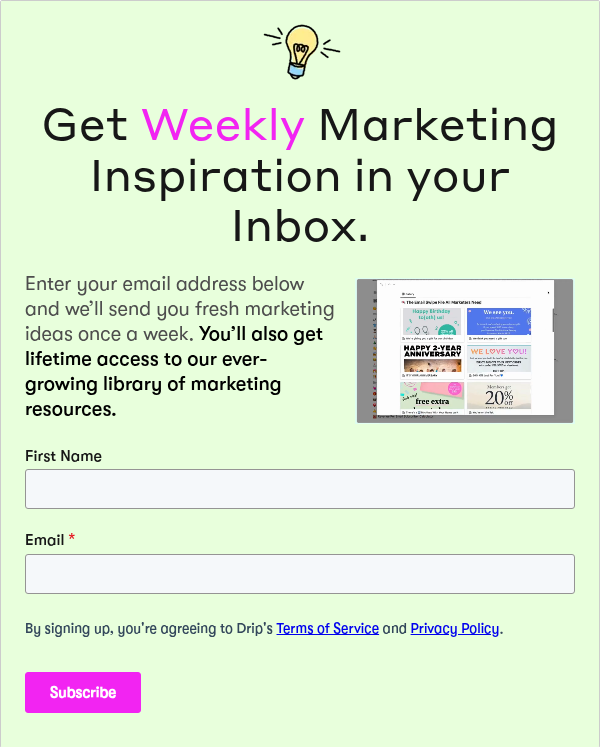
Think Drip might be your match? Start your free 14-day trial. No credit card required, and our team can migrate you from Omnisend when you're ready.