












































































































Drip vs. MailerLite
Is Drip better than MailerLite?
It's a common question—and one we can't answer without bias. MailerLite is a genuinely good tool—affordable, clean, and easy enough to pick up in an afternoon. For service businesses and solopreneurs, it might be exactly what you need.
For ecommerce brands, the picture changes. If you sell products online and you want email that responds to what your customers actually buy, browse, and abandon—and you want to see which emails are driving revenue, not just opens—that's the specific problem Drip is built to solve.
The short answer?
Drip is the better pick if you run an ecommerce store on Shopify, WooCommerce, or BigCommerce.
- Free migration and workflow setup
- Free 14-day trial (no credit card required)
- Up to 100 days money-back guarantee
Which platform is right for you?
Drip is for you if you:
- Run an ecommerce store on Shopify, WooCommerce, or BigCommerce.
- Want automation workflow templates built for ecommerce.
- Want advanced workflows triggering.
- Want dynamic segmentation.
MailerLite is for you if you:
- Aren't running an ecommerce store. You're a blogger, creator, or service business.
- Want a simpler tool with a lower learning curve.
- Don't need workflows that respond to what your customers buy and browse.
- Don't need to track which emails drive revenue—opens and clicks are enough.
Average customer stats that are anything but average.
99.8%
delivery rate.
51%
single email campaign open rate.
61%
workflow email open rate.
2%
single email campaign click-through rate.
5%
workflow email click-through rate.
68%
repeat purchase rate.
Drip vs. MailerLite
at a glance.
Ecommerce is where these two platforms diverge sharpest.
Here's how they stack up on the features that actually move product.
| Features |
drip
|
MailerLite |
|---|---|---|
| Dynamic product block (pull live catalog data directly into emails) | Yes | No |
| Dynamic coupon codes (unique discount code per recipient) | Yes | No |
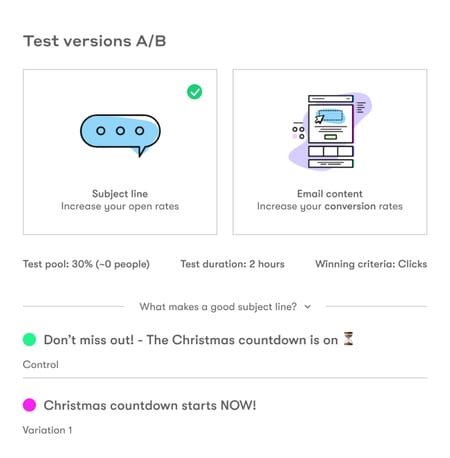
| A/B testing on all plans | Yes | No |
| Custom HTML editor on all plans | Yes | No |
| Visual drag-and-drop email builder | Yes | Yes |
| Reusable content blocks | Yes | Yes |
| Mobile-responsive emails | Yes | Yes |
| Email templates built for ecommerce | Yes | No |
| Shopify, WooCommerce and BigCommerce integrations | Yes | No |
| Browse behavior tracking (product views, page visits) | Yes | No |
| Product catalog sync inside the email builder | Yes | No |
| Facebook Custom Audience sync on all plans | Yes | No |
| Visual workflow builder with if/else branching logic | Yes | No |
| Goals (auto-advance or exit a workflow when a conversion fires) | Yes | No |
| Multiple triggers per workflow | Yes | No |
| LTV-based segmentation | Yes | No |
| Browse behavior segmentation | Yes | No |
| Liquid templating (per-recipient dynamic email content) | Yes | No |
| Spin-to-win gamified opt-ins | Yes | No |
| Mystery offer opt-ins | Yes | No |
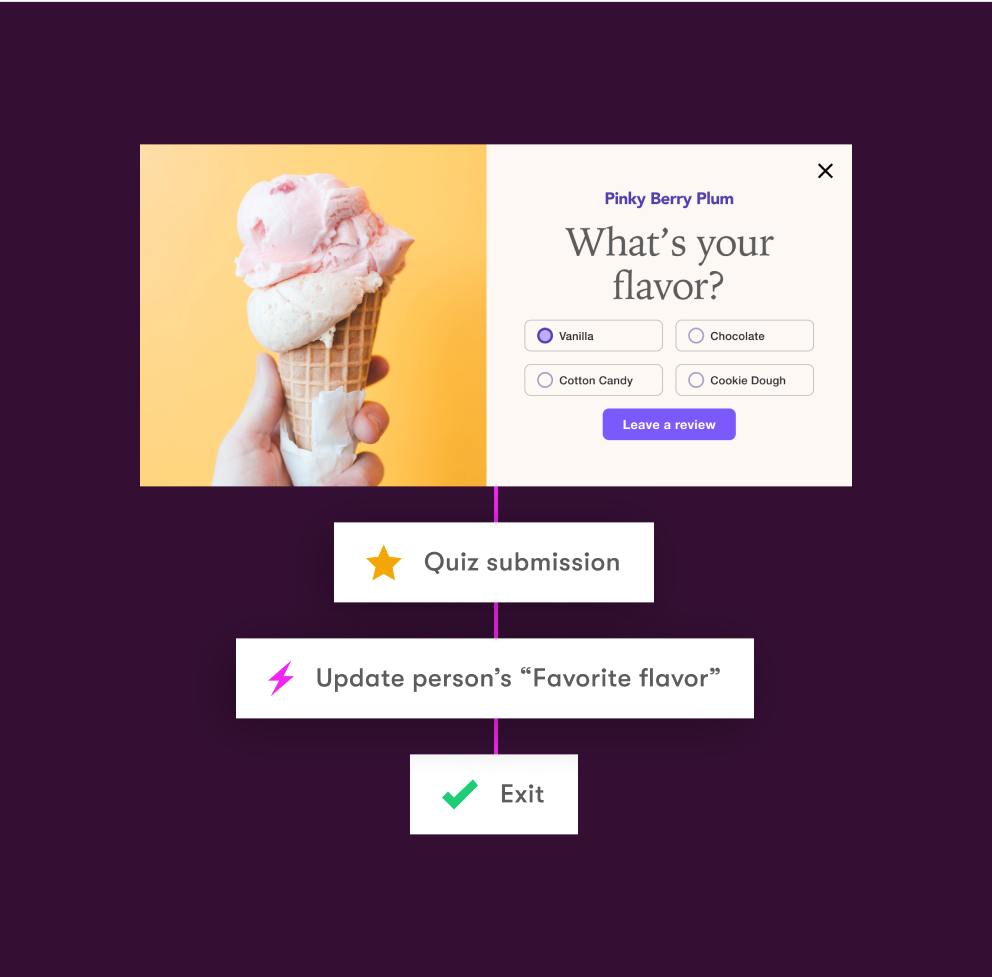
| Multi-step quiz (answers stored as custom fields, trigger personalized workflows) | Yes | No |
| All features included on every plan—no feature gating | Yes | No |
| Free migration service available (templates, workflows, and data) | Yes | No |

What TechExpress
says about Drip.

"We have been really pleased with our decision to move to Drip—the people and the support have been top class.
We are already seeing the positive results in out email metrics.
I would highly recommend."
TechExpress
Shopify Review
What Drip Does
That MailerLite Doesn't
The comparison table above covers the full picture.
If you want the short version, here are the five capabilities that matter most for ecommerce brands—and that MailerLite doesn't offer at any plan level:
- Revenue attribution per email, workflow, and campaign.
Drip tracks exactly how many dollars each email generates via Revenue Per Recipient (RPR) tracking, with both click-through and view-through attribution models. MailerLite shows opens and clicks only—there's no revenue attribution. - Browse abandonment automation.
Drip can fire a personalized workflow when a contact views a product without adding to cart—triggered by live on-site browse data. MailerLite has no browse behavior tracking and no browse abandonment capability. - Native BigCommerce and Magento integrations.
Drip integrates natively with Shopify, WooCommerce, BigCommerce, and Magento. MailerLite supports Shopify and WooCommerce only. - LTV-based segmentation.
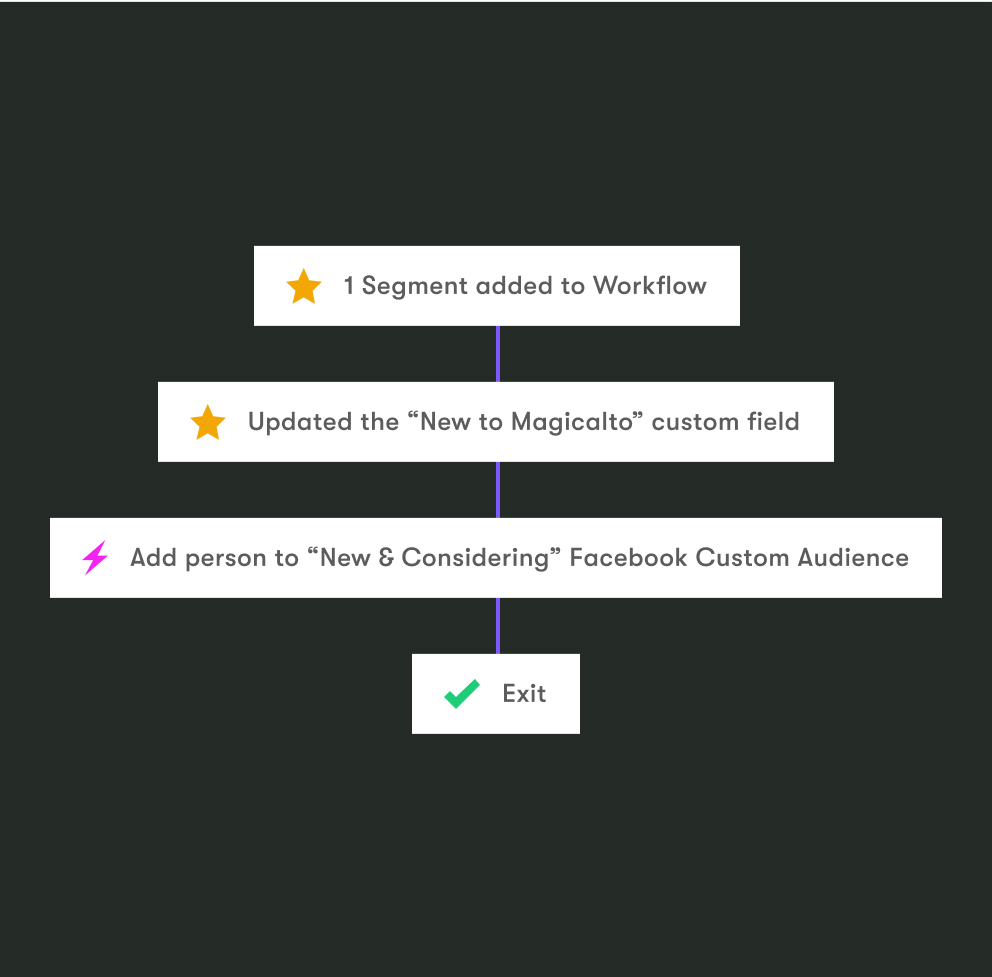
Drip lets you segment directly by customer lifetime value—"LTV greater than $500" can trigger a VIP workflow automatically. MailerLite cannot segment by customer lifetime value. - Conditional workflow logic with Goal-based exits.
Drip's workflow builder routes contacts down different paths based on their data, and stops a workflow automatically the moment a purchase fires—so no one gets an abandoned cart email after they've already bought. MailerLite runs linear sequences only: no branching, no Goal-based exits.
Why Choose Drip Over MailerLite?
Pricing
Yes, MailerLite costs less per month. That's real, and it's worth saying out loud. For a blogger, a solopreneur, or a service business, it may be a smart call.
But if you're running an ecommerce store, the question isn't "which tool has the lower monthly bill?" The question is "which tool makes me more money?" Drip starts at $39/month—and it tracks every dollar that email marketing generates for you. If your abandoned cart sequence recovers one extra sale this month, you've already broken even on the difference. If it recovers what most ecommerce brands actually recover from that single workflow, you're not paying for Drip—Drip is paying for itself.
It also helps that Drip's pricing model has no tricks. Every plan gets every feature. You're not hunting for the tier that unlocks the thing you actually need. You pay for contacts. That's it.
Ecommerce Depth
MailerLite connects to Shopify and WooCommerce. Drip is built for them—and for Shopify, BigCommerce, and any custom store via the Shopper Activity API. The difference isn't just which platforms are supported. It's what happens once you're connected.
In Drip, your store data becomes the engine behind everything. A customer browses a product twice without buying? A browse abandonment workflow fires automatically—personalized to that exact product, pulled from your live catalog. They add something to their cart and disappear? A multi-step abandoned cart series kicks off with their actual cart contents, a dynamic product block, and a time-sensitive incentive on the final email. It stops the moment they purchase—no accidental "did you forget this?" to someone who already checked out.
MailerLite can send emails. Drip responds to what your customers actually do. That distinction is where ecommerce revenue lives.
The results back it up. Nifty Gifts saw a 77% increase in revenue in their first two months with Drip—their abandoned cart workflow hit a 46% open rate and generated 122% higher average order value from email than from direct traffic. Spring Copenhagen migrated from a general-purpose ESP and saw average order value jump 32.24% and newsletter click-through rates nearly double (up 96%) after switching to Drip's behavioral workflows. Mythologie Candles, a niche DTC brand, attributed 60–80% of their total revenue to Drip in their first nine months—reaching $1M in sales. None of that was possible with the tool they started on.
Ease of Use
MailerLite is genuinely easier to learn—anyone who tells you otherwise is being less than honest. Its interface is one of the cleanest in email marketing, and you can build a campaign in minutes without reading a single help article.
Drip has a steeper learning curve. It's a more powerful tool, and power takes a day or two to get comfortable with. But here's what that means in practice: MailerLite's simplicity is also its ceiling. When your ecommerce strategy needs conditional branching, LTV-based segmentation, browse abandonment triggers, or revenue attribution—MailerLite doesn't have the floor those things build on. Drip does.
And you don't navigate that learning curve alone. For accounts migrating with 17,500+ contacts, Drip's team handles the full setup: templates rebuilt, workflows recreated, data imported. You also get 90 days of personalized onboarding. You're not handed a login and left to figure it out.
7 reasons people choose Drip.

Better list management.
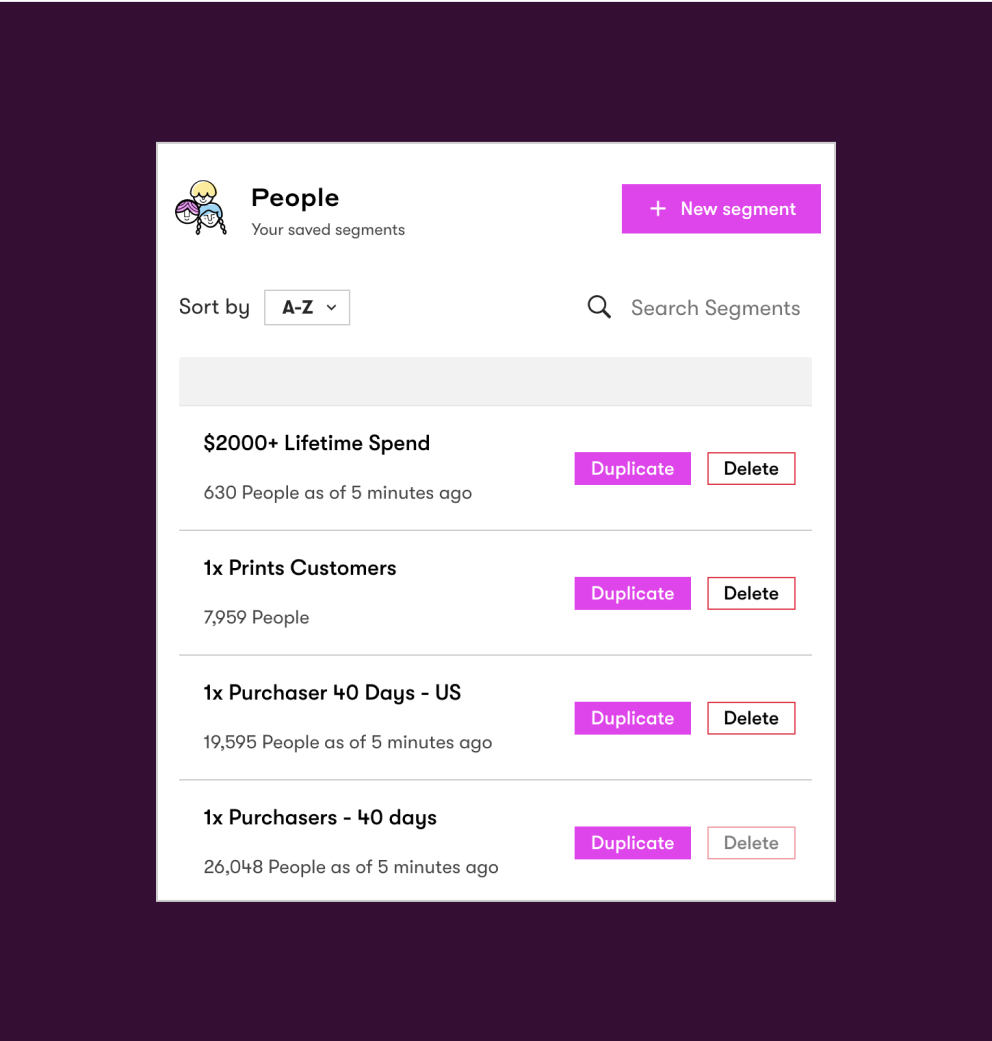
Say goodbye to manually moving people from one list to another. Drip’s segmentation is dynamic, which means Drip updates your people in real time depending on if someone meets the criteria for a specific segment or not.
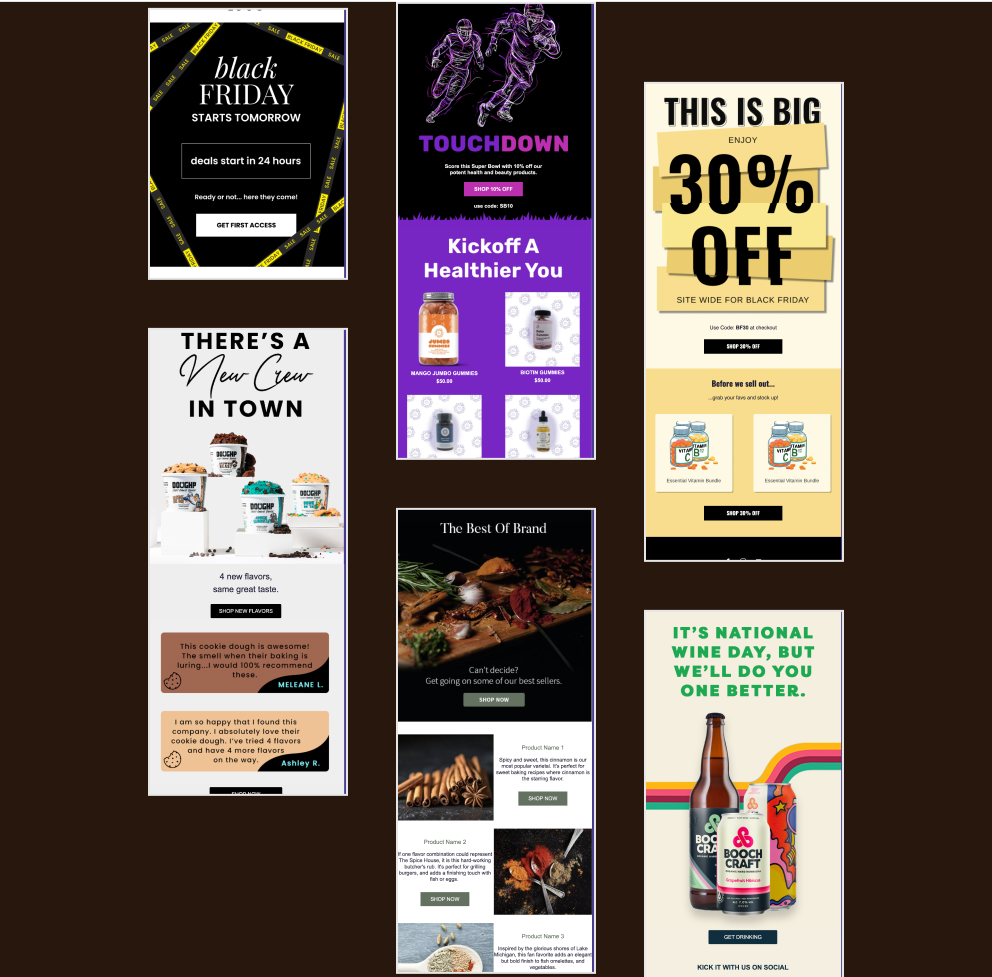
Multichannel workflows made for ecommerce.
Our workflows go beyond just email. Sync Facebook Custom Audiences with Drip segments and craft powerful marketing campaigns that align across channels. Tap into your People’s behaviors and change up the messaging they see to deliver a consistent customer experience across the board.

Better deliverability.
Our dedicated deliverability team works hard to maintain sky-high deliverability, and is available to answer any questions and help optimize your account so you can have confidence that your emails are always reaching the inbox.
Unlimited email sends.
Drip offers unlimited monthly email sends to all its customers, up to 30,000 people. (Yes, really.)


Onsite marketing.
Turn your website into a high-converting marketing channel with Onsite. Design onsite journeys that guide first-time visitors toward becoming potential customers. And then, later, convert them into customers and repeat lifetime buyers for your brand.
Ongoing Support.
Support with Drip means enjoying email, live chat, and live audio screen recording at your finger tips. With Drip's full support, you’ll be able to resolve issues in real time, more efficiently and effectively.
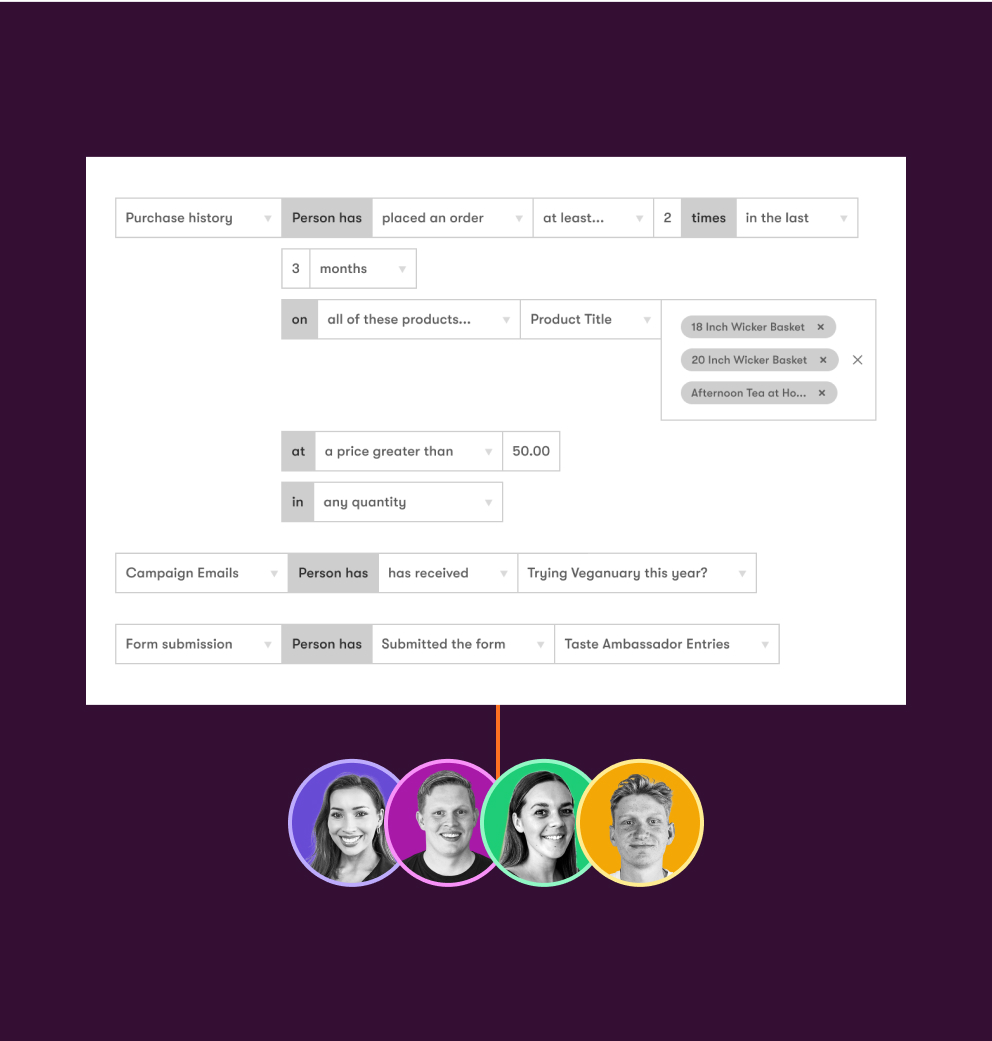
Ecommerce-fueled segments.
Segment the right way, in real time. Infuse email, Onsite, and workflows with segment-driven strategies. Deliver ultra-personalized messaging that keeps people engaged with your brand. Use customer-action-based triggers to transcend basic personalization.

Frequently asked questions.
Yes—Drip attributes exact dollar revenue to every email, workflow, and campaign via Revenue Per Recipient (RPR) tracking. MailerLite tracks opens and clicks only; there's no revenue attribution in MailerLite at any plan level.
Drip tracks RPR at three levels: per individual email, per workflow, and per campaign. You can see exactly which abandoned cart email recovered the most orders this month, which welcome sequence converts at the highest rate, and which segment generates the most revenue per person reached. Drip supports both click-through attribution (sale within 5 days of a click) and view-through attribution (visited site within 1 day of an open, purchased within 5 days), and you can toggle between models depending on how conservative you want to be. If you're running an ecommerce store and you don't know which emails are driving sales, you're managing your program on gut feel. Drip fixes that.
Drip's abandoned cart workflow is a native, multi-step sequence that pulls your actual cart contents—product images, prices, and checkout links—directly into the email, and stops automatically the moment a purchase fires. MailerLite has a basic abandoned cart trigger through Shopify and WooCommerce integrations, but no dynamic product block, no multi-step branching logic, and no automatic exit on purchase.
In practice, a Drip abandoned cart sequence runs over multiple emails: a helpful nudge at hour one, objection handling at 24 hours, and a time-sensitive incentive at 48 hours. The Goal node is the critical piece MailerLite is missing—without it, a customer who buys after email one still receives emails two and three. With Drip, the moment a purchase fires, the entire sequence stops immediately. No post-purchase spam. No customer confusion. Just recovered revenue.
Yes—Drip integrates natively with Shopify, WooCommerce, BigCommerce, and Magento, syncing your full product catalog, order history, cart events, and browse behavior in real time. MailerLite supports Shopify and WooCommerce only; there's no native BigCommerce or Magento integration.
For custom or headless ecommerce setups, Drip's Shopper Activity API provides the same standardized event schema (Order, Cart, Product) as the native integrations — so stores built on custom platforms get the same behavioral data powering their workflows. If your store runs on BigCommerce or Magento and you want automation powered by real store data, MailerLite isn't a viable path. Drip is.
Every Drip plan includes every feature—no feature gating, no upgrade walls. You pay based on your count of Active People, and that's the only variable. MailerLite splits its product across multiple paid tiers, with the custom HTML editor, live chat support, unlimited users, dynamic content, and Facebook integration all locked behind the Advanced plan at $20+/month.
What this means in practice: the honest price comparison for a growing ecommerce brand is often MailerLite Advanced vs. Drip—not MailerLite Free vs. $39. That narrows the gap considerably, and Drip's 25% annual discount (vs. MailerLite's ~10%) narrows it further. You're never mid-setup, realizing the thing you actually need requires an upgrade.
Drip segments by purchase history, customer lifetime value, average order value, order count, time since last order, browsing behavior, and lifecycle stage—all updating dynamically in real time from your connected store. MailerLite's segmentation is built on email engagement data and limited purchase activity; it can't segment by LTV and doesn't use browse behavior as a filter.
A few specific capabilities MailerLite doesn't have: retroactive segments (create a new segment in Drip and it instantly populates with every qualifying person already in your account), LTV-threshold triggers ("LTV crossed $500" fires a VIP workflow), and a built-in customer lifecycle model that moves customers through Potentials → Casuals → Core → Champions based on actual purchase behavior. Drip customers who use segments earn 5x more revenue than those who don't—that figure exists because the segmentation is deep enough to make a real difference.
Drip's visual workflow builder supports if/else branching logic, Goal-based exits (the workflow stops the moment a desired outcome fires), and split-path A/B testing across entire workflow branches—not just subject lines. MailerLite's automation builder runs linear sequences only: no conditional branching, no Goals, no workflow-level split testing.
The branching logic is what makes Drip's workflows feel personal at scale. A VIP customer gets routed down a different post-purchase path than a first-time buyer—inside the same workflow. Someone who browsed three times without adding to cart gets a different series than someone who made it to checkout. None of that is possible in MailerLite. What you build in MailerLite is the same sequence for everyone. What you build in Drip responds to who each person actually is.
Drip starts at $39/month for up to 2,500 contacts; MailerLite starts at $10/month with a free plan for up to 500 contacts. At 10,000 contacts, Drip runs $154/month vs. MailerLite Growing Business at ~$73/month. Drip costs more—and also includes every feature at every plan with no gating, full revenue attribution, and native ecommerce automation that MailerLite doesn't offer at any tier.
For ecommerce brands, the relevant question isn't which tool has the lower monthly bill—it's which tool generates more revenue. Drip's abandoned cart workflow alone recovers meaningful sales for most stores. If your average order value is $80 and Drip recovers five additional carts a month, the math is simple. Drip also offers a 25% annual discount and a 14-day free trial—enough time to connect your store, run your first workflows, and see the revenue numbers before committing.
For accounts with 17,500+ contacts, Drip's free migration service handles the full move: email templates rebuilt, automation workflows recreated, subscriber data and custom fields imported—plus 90 days of personalized onboarding after launch. For smaller accounts, the 14-day free trial gives you full access to connect your store, import contacts, and build your first workflow before committing.
The learning curve is real—Drip is more capable than MailerLite, and that takes a day or two to get comfortable with. But you're not navigating it alone. Drip's support is consistently rated among the best of any ESP, and the onboarding period is focused on making sure your workflows are generating revenue from day one, not just technically running.
For Shopify stores that want behavioral automation and revenue attribution, yes—Drip is purpose-built for Shopify in a way MailerLite isn't. Drip's Shopify integration syncs your full product catalog, order history, cart events, and on-site browse behavior in real time, and makes all of it available as segmentation filters and workflow triggers. MailerLite's Shopify integration handles basic order sync but doesn't track browse behavior, can't pull live product data into emails, and has no revenue attribution.
In Drip, when a Shopify customer views a product twice without buying, a browse abandonment workflow fires. When they abandon a cart, a multi-step sequence recovers it with their actual cart contents. When they purchase, every active workflow stops immediately. Brands using Drip with Shopify have reported a 46% open rate on abandoned cart emails and average order values 122% higher from email than from direct traffic. MailerLite can connect to Shopify—but it can't do any of that.
The five most significant capabilities Drip has that MailerLite doesn't: revenue attribution per email and workflow, browse abandonment automation, native BigCommerce and Magento integrations, LTV-based segmentation, and conditional if/else branching in workflows with Goal-based exits.
Beyond those five, Drip also includes dynamic product blocks (search your store catalog from inside the email builder and drag products directly into any email), dynamic per-recipient coupon codes, gamified onsite opt-ins—spin-to-win wheels, mystery offers, and multi-step quizzes that store answers as custom fields and trigger personalized workflows—retroactive segments, and a built-in customer lifecycle model. None of these are premium add-ons. They're included in every Drip plan. MailerLite is a well-built tool for general email marketing. It just wasn't designed for ecommerce revenue operations.
MailerLite is good enough for simple ecommerce email: welcome sequences, basic newsletters, and straightforward post-purchase thank-yous on Shopify or WooCommerce. It's not built for behavioral automation, revenue attribution, or serious lifecycle marketing. If you want to know which emails drive purchases, recover abandoned carts with dynamic product content, and segment your customers by what they actually buy and browse, you'll hit MailerLite's ceiling quickly.
The clearest signal that you've outgrown MailerLite for ecommerce: you're sending the same campaigns to your whole list because you don't have the behavioral data to do otherwise, and you have no visibility into which emails are generating revenue. That's not a content problem—it's a platform problem. Drip is built to solve it.
No—Drip doesn't have a free plan. MailerLite offers a free plan for up to 500 contacts with 12,000 emails per month. Drip offers a 14-day free trial with full feature access and no credit card required, starting at $39/month after the trial period.
If you're early-stage and budget is the primary constraint, MailerLite's free plan is a legitimate starting point—especially if you're not primarily an ecommerce brand. If you're running a store and want to evaluate Drip's revenue attribution, abandoned cart recovery, and behavioral segmentation before paying, the 14-day trial gives you enough time to connect your store, build your first workflows, and see the revenue numbers firsthand. Most ecommerce brands don't need a free plan—they need to know whether the tool pays for itself. The trial answers that question.
Come for the automated marketing.
Stay for the endless revenue growth.